




Key Takeaways
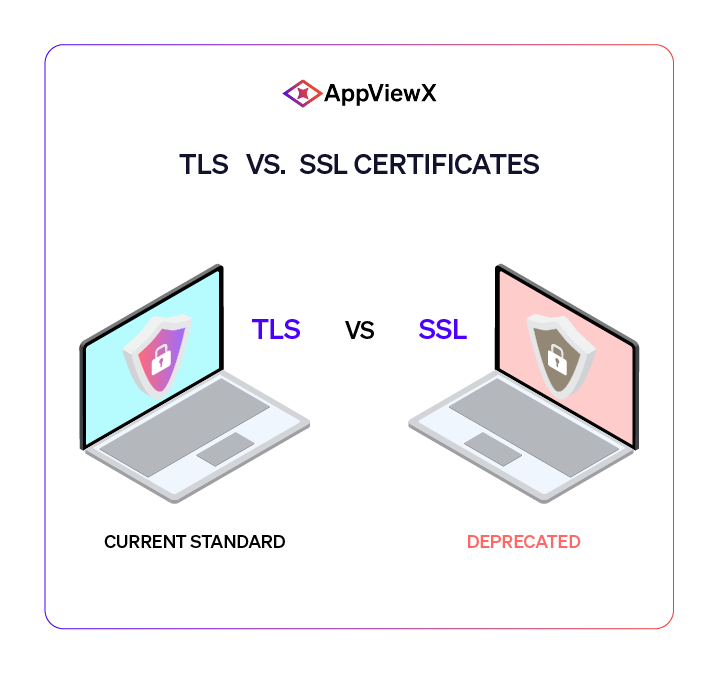
- The difference between TLS and SSL certificates is that TLS has replaced SSL as the standard protocol for encrypting communications between web browsers and servers. Most certificates that are issued today are TLS certificates, despite still being referred to as “SSL certificates.”
- TLS 1.3 is fast becoming the universal standard for security protocols, while SSL 3.0 was formally deprecated in 2015.
- Perfect forward secrecy (PFS) is a mandatory requirement for TLS 1.3, meaning every new session demands its own set of ephemeral keys to prevent past sessions from being compromised.
- SSL and TLS certificates are essentially the same X.509 digital document, but historical reasons led to the general use of the term “SSL certificate” when referring to most protocol certificates.
- Crypto-agility and an automated certificate lifecycle management solution are key to building a TLS strategy that ensures organizational resilience.
How to differentiate Between TLS and SSL
Have you ever found yourself confusing “TLS” with “SSL”? If so, you aren’t alone. Many people, even those working in the cybersecurity industry, tend to mistake one for the other. While the terms are often used interchangeably, they are not the same. Knowing the difference between the two is vital to strengthening your security posture, right from your compliance standing to how you structure your certificate lifecycle management.
This article breaks down the key differences between TLS and SSL, as well as tips on how to get your infrastructure TLS-ready.
How SSL Became TLS
Before jumping into the distinction between TLS and SSL, it’s important to know the background of the two protocols.
In the mid-1990s, Netscape developed the Secure Sockets Layer (SSL) protocol to encrypt and protect communications between web browsers and servers. This security protocol went through quite the journey before becoming what it is today. SSL 1.0 was never launched publicly because of its security flaws, while SSL 2.0, released in 1995, was later found to be vulnerable to man-in-the-middle attacks. Finally, in 1996, SSL 3.0 was launched with a major redesign that cemented its position as the backbone of early internet encryption.
Meanwhile, the Internet Engineering Task Force (IETF) took over the development of the protocol, and released the Transport Layer Security (TLS) 1.0 in 1999. This protocol came as an upgrade to SSL 3.0, offering incremental security enhancements. In 2006, TLS 1.1 became available to the public, followed by TLS 1.2 in 2008, then TLS 1.3 in 2018, which was finalized via IETF RFC 8446. With each iteration came a significant improvement that aimed to address any faults in its predecessor while ensuring compliance with the cryptographic standards negotiated during the handshake process.
2015 saw the formal deprecation of SSL 3.0 by the IETF via RFC 7568, a move that was brought on by the design flaws exposed by the POODLE vulnerability. Over time, major browsers followed suit, dropping support for TLS 1.0 and 1.1 due to evolving security requirements.
Today, TLS 1.2 and 1.3 remain the only versions of the protocol still considered secure, with TLS 1.3 fast becoming the universal standard. The 30-year evolution from SSL to TLS 1.3 makes one thing glaringly clear: the cybersecurity industry is consistently moving toward stronger cryptography.
TLS vs. SSL: A Technical Comparison
TLS and SSL carry substantial distinctions in several areas, from handshake round-trip times to browser support. Let’s take a closer look:
SSL vs. TLS: Key Protocol Differences
Perhaps the most significant advancements in the transition from SSL to modern TLS is the efficiency and security of the TLS handshake process. SSL 3.0 and TLS 1.2 typically required two complete round trips between the client and server before a secure session could be fully established. TLS 1.3 reduced this to a single round trip for new connections, improving both performance and latency. TLS 1.3 also introduced support for 0-RTT (zero round-trip time) session resumption for returning clients, further reducing latency and enabling even faster reconnections.
TLS 1.3 also mandates perfect forward secrecy (PFS), meaning each session needs ephemeral keys. This ensures that session keys are temporary and unique to each connection. As a result, even if a server’s long-term private key is later compromised, previously captured sessions remain protected.
Another advantage of TLS 1.3 is that it replaces the RSA key exchange with ephemeral Diffie-Hellman-based exchanges. This significantly improves resilience against “harvest now, decrypt later” scenarios, where attackers collect encrypted traffic today in hopes of decrypting it in the future with quantum computing capabilities.
| Feature | SSL 3.0 | TLS 1.2 | TLS 1.3 |
| Release Year | 1996 | 2008 | 2018 |
| Current Status | Deprecated (2015) | Current but Gradually Being Replaced | Current Standard |
| Handshake Round Trips | 2+ | 2 | 1 (with 0-RTT for Resumption) |
| Forward Secrecy | Not Supported | Supported (Configuration Dependent) | Mandatory |
| Cipher Suite Support | Weak (RC4, DES) | Mixed (Supports Legacy Ciphers) | Strong Only (AEAD Ciphers) |
| Known Vulnerabilities | POODLE, BEAST, DROWN | Cipher suite/implementation issues (e.g., LUCKY13, ROBOT, mitigated with proper configuration) | None Critical to Date |
| Performance | Slower | Moderate | Fastest |
| Major Browser Support (2025) | None | Broad but Declining | Universal |
Sources: IETF RFC 8446, Cloudflare TLS 1.3 Overview
It’s worth mentioning that TLS 1.3 removed support for legacy cipher suites such as RC4, DES, 3DES, and CBC-mode ciphers. Instead it only permits modernAuthenticated Encryption with Associated Data (AEAD) cipher suites, including AES-GCM and ChaCha20-Poly1305 variants. Through SP 800-52 Rev. 2, NIST urges organizations to configure their servers to be TLS 1.3-ready while prohibiting the use of all other versions prior to TLS 1.2.
“SSL Certificate” vs. “TLS Certificate”: What’s the Difference?
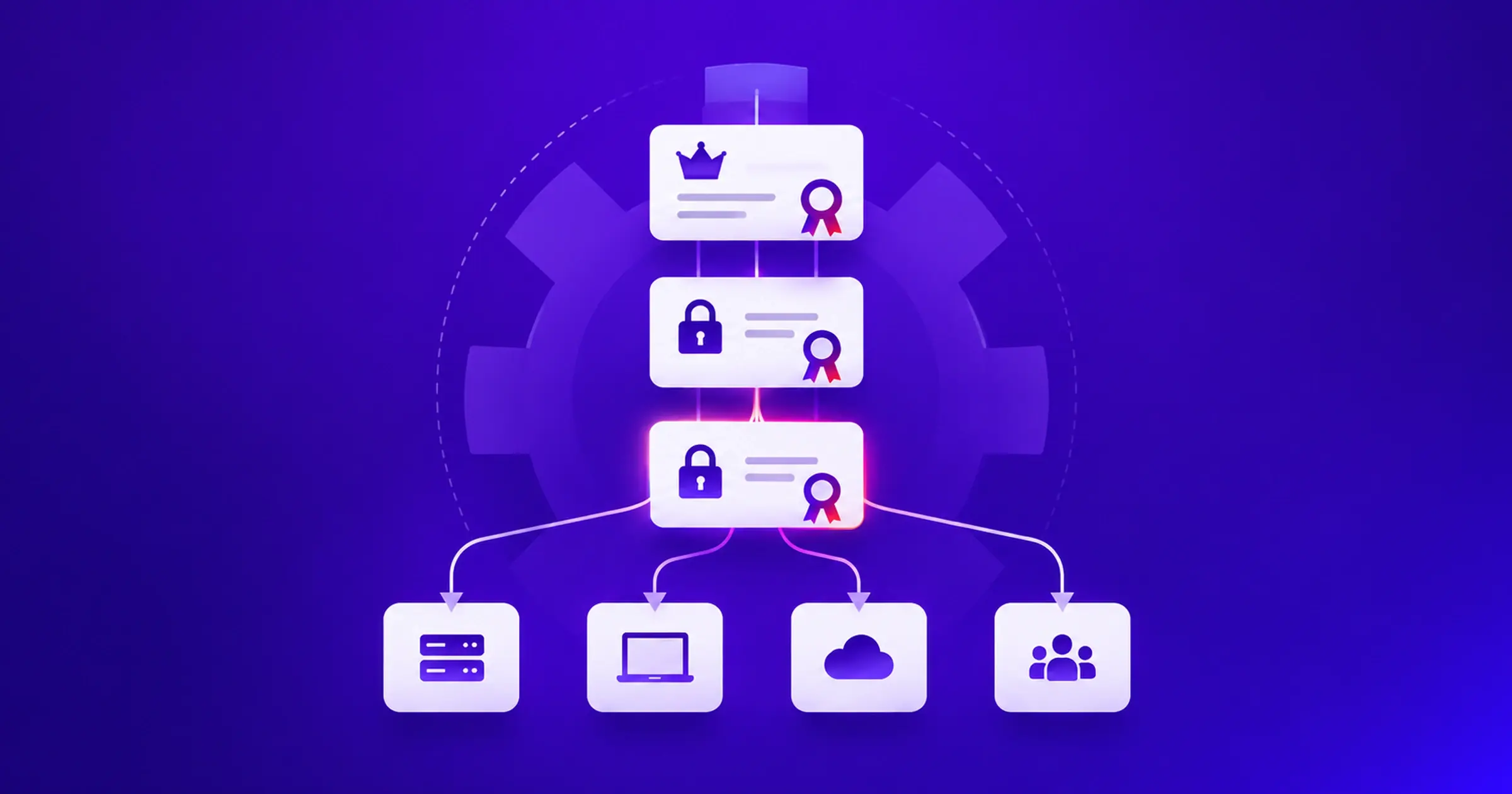
Technically speaking, there’s little difference between SSL and TLS certificates. Both are standard X.509 digital certificates that include the domain owner’s public key, the issuing Certificate Authority’s (CA) signature, certificate validity dates, and other relevant information. These certificates are protocol-agnostic, meaning they don’t dictate whether the connection runs on SSL or TLS… The security of your connection is determined by which TLS version your server negotiates during the handshake process.
The use of the term “SSL certificate” only persists because of historical reasons. Given that CAs have been marketing SSL certificates since the 1990s, the name has remained widely adopted even after the arrival of TLS certificates. In practice, when you purchase an “SSL certificate” today, just know that what you’re actually buying is a TLS certificate.
Even though this naming convention may seem harmless, it can pose a significant operational concern. If a team still thinks in “SSL” terms, chances are they don’t scrutinize their protocol configurations well enough. Bear in mind that a security certificate enables encryption, but the protocol version determines the strength and effectiveness of the encryption. Hence, having a valid TLS/ SSL certificate on a server that still allows SSL 3.0 or TLS 1.0 connections does not guarantee complete server security.
Why the TLS vs. SSL Distinction is Important
With those differences in mind , we can now dive into the reasons why knowing this distinction matters in practice. The protocol version you choose to incorporate into your infrastructure directly affects the strength of your encryption and your ability to defend against modern cyberattacks. Let’s look into why this information matters for your security posture:
Compliance and Regulatory Implications
Despite seeming like a small gap between versions, the difference between SSL and TLS is more of a compliance chasm. TLS 1.3 is a far cry from what it was over 30 years ago. Almost all regulatory frameworks these days demand TLS 1.2 as a minimum requirement, and a majority are actively transitioning to TLS 1.3. Security systems that still run on older deprecated protocols run the risk of audit failures.
The PCI Security Standards Council was among the first major standards bodies to explicitly prohibit SSL and early TLS versions, via the PCI DSS 4.0, from being used in payment-related systems. This position also aligns with NIST SP 800-52 Rev 2 when it comes to federal systems, requiring TLS 1.3 for configurations. And while HIPAA does not mandate a specific protocol version, it refers to NIST for technical guidance, therefore imposing the same standard.
To ensure that you can easily adapt to changing cryptographic mandates, it’s best to build crypto-agility into your security architecture as early as now.
Compliance Standards and TLS Version Requirements
| Compliance Standard | Minimum TLS Version Required | SSL 3.0 Allowed? | TLS 1.01/1.1 Allowed? | TLS 1.3 Recommended? |
| PCI DSS 4.0 | TLS 1.2 | No | No | Yes |
| NIST SP 800-52 Rev. 2 | TLS 1.2 | No | No | Yes |
| HIPAA (per NIST Guidance) | TLS 1.2 | No | No | Yes |
| FedRAMP | TLS 1.2 | No | No | Yes |
| GDPR (Technical Measures) | TLS 1.2 (Recommended) | No | No | Yes |
| SOC 2 Type II | TLS 1.2 | No | No | Yes |
Sources: PCI SSC Document Library, NIST SP 800-52 Rev. 2
The Future of TLS
Seeing how SSL evolved into TLS over the course of three decades doesn’t mean that the next cryptographic shift will take as long. In fact, trends and policies revolving around cryptography are transforming and converging faster than we realize:
Shortening Certificate Validity Periods
In 2025, the CA/Browser Forum approved Ballot SC-081v3, setting in motion a phased reduction of validity periods for public TLS certificates from 398 days to 47 days March 2029. The first phase of this reduction has already taken effect, with certificate validity at 200 days today, dropping further to 100 days by March 2027 and reaching its final limit of 47 days by March 2029. This means that organizations that are currently handling a thousand certificates will face around 7,766 renewals yearly in the future. To ensure this massive operational shift does not affect your company’s overall performance, you should look into automating your certificate lifecycle management system.
Post-Quantum Cryptography
The reality of post-quantum cryptography (PQC) cannot be overstated, with NIST having finalized the first set of PQC algorithm standards back in 2024 and its transition roadmap necessitating the deprecation of RSA and ECDSA by 2030. Having a certificate management solution that offers PQC readiness tools can give you a leg up once the need for migration comes around because it can help you evaluate your cryptographic posture and transition efficiently.
The Need for Crypto-Agility
Crypto-agility, or an organization’s ability to handle certificates, swap algorithms, and address any vulnerabilities without operational disruption, has grown into a strategic advantage for many teams navigating the changes within the cybersecurity industry. It helps build organizational resilience, allowing you to adopt new algorithms and manage the SSL certificate lifecycle with ease.
Becoming TLS Ready
With a clear picture of the current protocol landscape, it’s now time to leverage that knowledge. Here are some of the steps you can take to achieve TLS-readiness:
- Audit your protocol support and identify which TLS versions every component in your security infrastructure accepts. This is crucial because even a single server still allowing SSL 3.0, TLS 1.0, or TLS 1.1, may create security risks and compliance gaps. You can start by availing a free SSL/ TLS certificate scan to get a better baseline view of your certificate environment, from protocol support to cryptographic configurations and chain-of-trust status.
- Evaluate your certificate maturity and check if your organization still depends on traditional or manual tools, such as spreadsheets and calendar reminders, or a centralized certificate lifecycle management platform for handling audits and renewals. Manual intervention simply won’t cut it in a world where the 47-day mandate is fast approaching. If you plan to work with a vendor, make sure they can deliver end-to-end automation spanning discovery, issuance, renewal, revocation, and policy enforcement.
- Prepare for cryptographic transitions by investing in a certificate lifecycle management platform with built-in crypto-agility. This will be a big help in adapting to regulatory shifts without putting day-to-day operations at risk. Bear in mind that the IETF is already working towards integrating PQC key exchange mechanisms into TLS. And while the transition from SSL to TLS was arduous, it doesn’t have to be the same case for the PQC era.
Build Your TLS Strategy with AppViewX
Knowing the difference between TLS and SSL is a solid first step, but with the PQC era on the horizon and certificate lifespans already shrinking, turning that knowledge into an effective TLS strategy is what really counts. The right tools can make that a lot more manageable.
The AppViewX platform provides security teams with enhanced visibility and control over their certificate infrastructure. It offers centralized discovery across multi-cloud environments, closed-loop lifecycle automation that can adapt to changing validity periods and cryptographic migrations, and rigid policy enforcement that guarantees the full compliance of your certificate system without operational disruptions or overhead. No matter the certificate volume, AppViewX scales to meet your security needs.
Request a demo now and set your TLS strategy in motion.
Tags
About the Author

Krupa Patil
Product Marketing Manager
A content creator focused on providing readers and prospective buyers with accurate, useful, and latest product information to help them make better informed decisions.