

In August 2025, attackers reached Cloudflare’s Salesforce support data through stolen credentials for its Salesloft Drift integration. During its response, Cloudflare found 104 API tokens in the exposed case text and rotated them. It reported no suspicious activity involving those tokens and no compromise of Cloudflare infrastructure. [1]
The route in was a chatbot integration. The exposed records contained credentials for another service.
The incident involved an attacker abusing an integration. AI agents extend this familiar risk: software can now choose tools, use retrieved information, and delegate work as a task unfolds.
Enterprises should choose AI governance tools based on whether they can trace, limit, and withdraw an agent’s authority across its full access chain.
That chain includes the permissions an agent receives, the sensitive information it can read, and the systems it can reach through both. This should guide the buying decision.
Key Takeaways
- Read-only access can expose credentials with authority elsewhere. Agent risk reviews must cover accessible content alongside permissions on the source system.
- Model governance, enterprise risk management, and agent identity governance each cover part of the access chain. Buyers need to connect approval conditions to controls in deployed workflows.
- An agent inventory supports security decisions when it connects owners, credentials, tools, and target resources. An agent count alone reveals little about business exposure.
- The best AI governance tools for a deployment can demonstrate control over its sensitive paths and support precise containment when access must end.
What the Salesloft Drift Incident Teaches AI Governance Buyers
Google Threat Intelligence Group reported that attackers used compromised Drift OAuth tokens to export Salesforce data across organizations from 8 to at least 18 August 2025. They searched the stolen data for further credentials, including AWS keys and Snowflake tokens. Google stated that the issue did not arise from a vulnerability in Salesforce’s core platform. [2]
The sequence adds a question to a standard access review: what authority could someone obtain from the records a connected application can read?
For an AI agent, that review should cover credentials in support cases, logs, files, and retrieved documents. Read-only permissions protect records from changes through that account. They still allow the account to read sensitive content.
An agent’s approved purpose therefore gives only part of the risk picture. A support agent may need access to tickets. Credentials pasted into those tickets could give it access beyond the support workflow.
Identity controls must work with secrets management, data protection, and isolation to address that wider exposure.
Types of AI Governance Tools and Platforms
AI governance software helps organizations assess AI systems, assign owners, approve uses, monitor risk, and retain evidence. When agents are in scope, those decisions must also govern authority across connected systems.
| Category | Primary responsibility | Buying question |
| Model governance | Evaluate model quality, safety, and suitability | Does the model meet the conditions of the approved use case? |
| Governance, risk, and compliance | Manage assessments, approvals, exceptions, and accountability | Who accepted the risk, and what access conditions apply? |
| Agent identity governance and runtime security | Govern identities, credentials, access, and supported actions | Can the deployed agent stay within those conditions? |
Vendors may span these categories. Compare demonstrated capabilities and establish how they work together.
A focused tool may address evaluation or discovery. An AI governance platform should connect several capabilities through shared policies and workflows. “Software” can describe either.
The useful distinction is whether an approval decision changes deployed access. A shared dashboard can show an exception; buyers should establish which component enforces it.
AI Agent Identity Governance Must Follow the Access Chain
An inventory should connect each agent to its owner, initiating user or system, credentials, models, tools, and target resources. Include child agents and shared accounts: the identity recorded by a target application may differ from the agent that initiated the action.
These relationships reveal where authority passes between systems. They also show who must act when access needs to change.
Require separate answers for discovery and control. A platform may discover a SaaS agent through an API while having limited ability to block its calls. A gateway may govern Model Context Protocol (MCP) traffic while direct API or terminal paths remain outside its reach.
Those boundaries define the additional controls the enterprise needs. They should also shape any claim that a platform provides complete coverage.
AI Governance Evaluation Criteria Should Start With Containment
Choose a business workflow and define an action it must prevent. For a support agent, that might be exporting an entire customer dataset or using a credential found in a ticket.
In a controlled test, establish which component blocks the action and whether the downstream system confirms the result. Then run a legitimate support task to check that the restrictions preserve useful work.
Next, withdraw access while the workflow is active. Inspect sessions, refresh tokens, queued jobs, and delegated agents. Stopping an agent process and revoking its credentials produce different outcomes.
Cloudflare’s response included disconnecting third-party Salesforce integrations and later restoring them with new secrets and stricter controls. [1] The business lesson extends to recovery: containment can interrupt useful connections while teams establish which are safe to restore.
Assess how narrowly the platform lets your team intervene, who owns recovery, and what evidence permits work to resume. These capabilities determine how access control supports business continuity.
How to Compare AI Governance Vendors
Set mandatory controls before weighting usability, coverage breadth, or price. A sensitive execution path that remains uncontrolled needs a documented restriction or compensating control.
Establish which changes reopen approval. Adding a write tool or broadening credential scope changes an agent’s authority, even when its name and model stay the same.
Ask who maintains these rules and integrations after the pilot. Security, AI engineering, application owners, and risk teams need clear responsibilities for keeping approved access aligned with deployed access.
This makes the comparison specific: which vendor can help your enterprise maintain control over the workflows it plans to run?
Choosing an AI Governance Platform: Test the Access Chain
Ask shortlisted vendors to demonstrate one workflow from approval to shutdown. Trace its owner, credentials, connected tools, and target systems. Then change its access and check the downstream result.
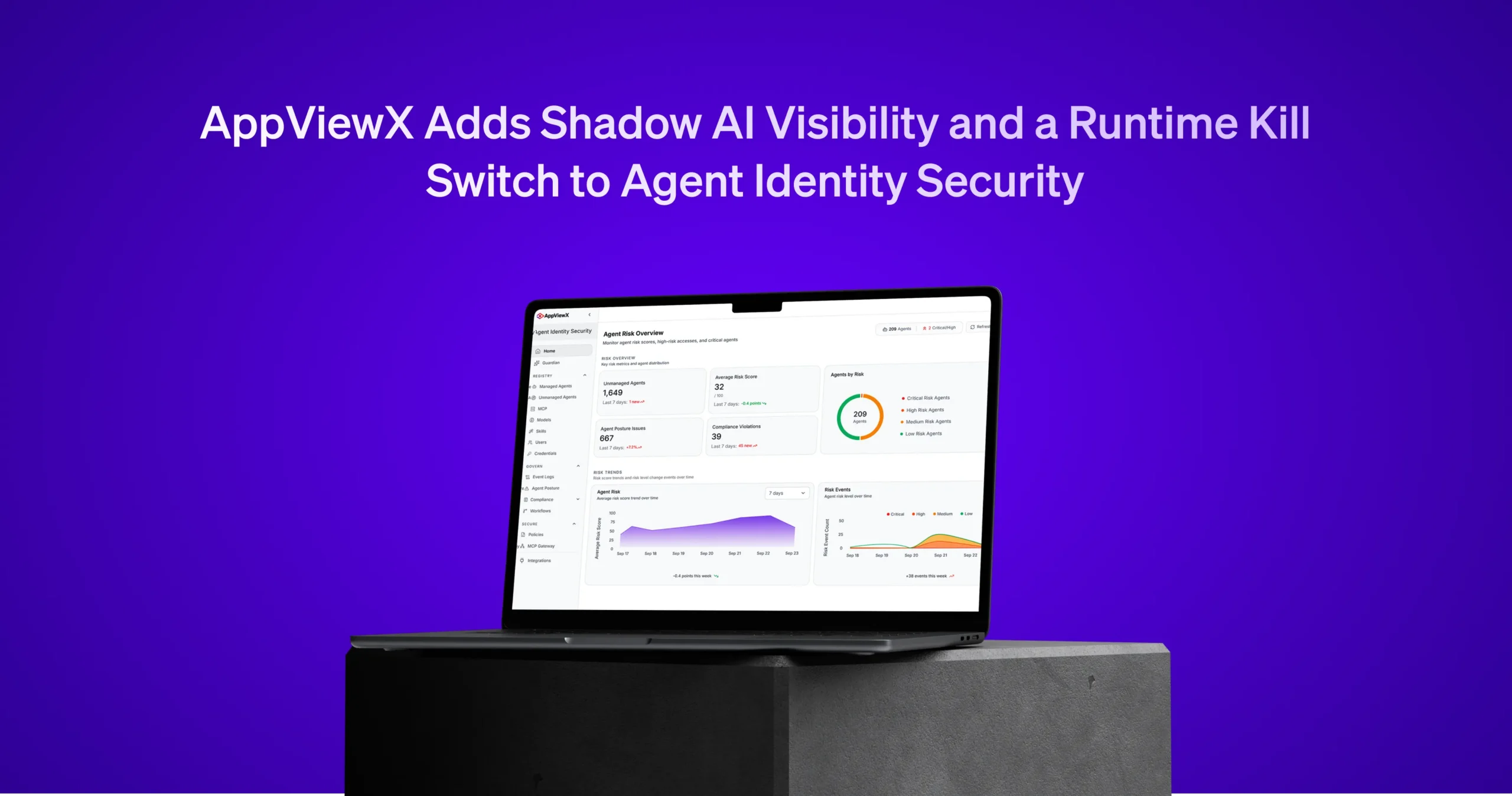
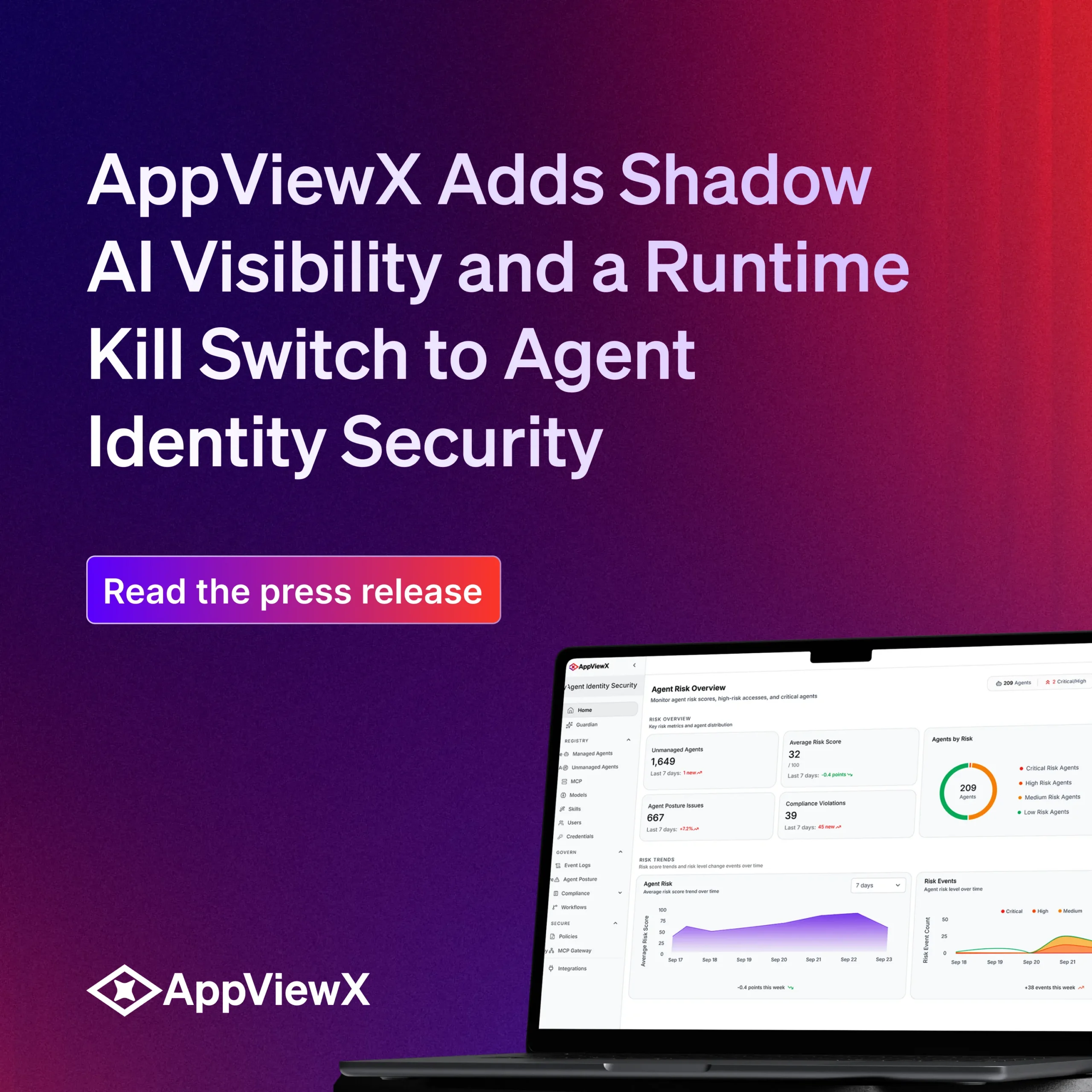
With AppViewX Agent Identity Security, test how its AI Bill of Materials, just-in-time access, runtime policies, and Agent Kill Switch work together across your deployment. Establish which connections it can discover, which actions it can control, and where other security tools must enforce the boundary. [3]
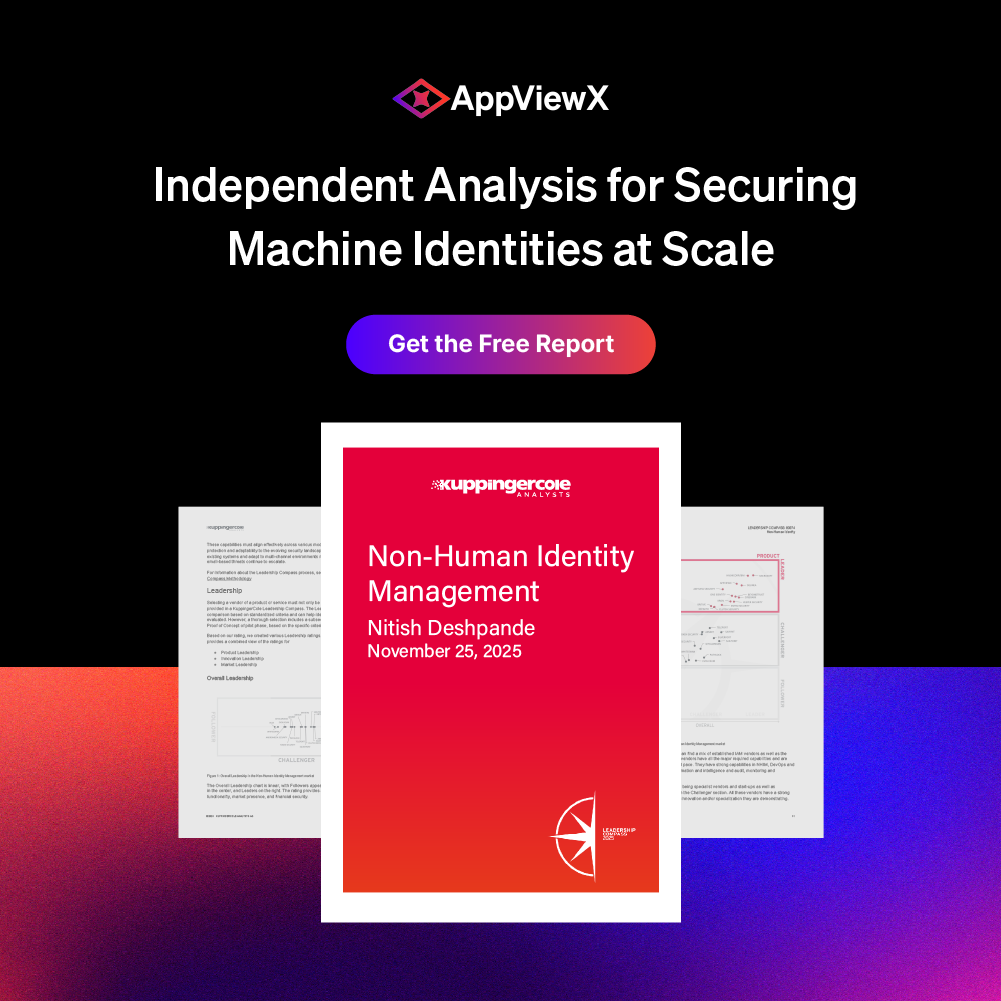
AppViewX’s recognition as an Overall Leader in KuppingerCole’s Leadership Compass: Non-Human Identity Management, published 25 November 2025, provides an identity-management credential. Your workflow test establishes suitability for your deployment. [4]
The buying decision should rest on evidence that your team can trace an agent’s authority, limit its use, and withdraw it when business conditions change.
Sources
- Cloudflare: Response to the Salesloft Drift incident
- Google Threat Intelligence Group: Widespread data theft targeting Salesforce instances via Salesloft Drift
- AppViewX Agent Identity Security and product release details
- KuppingerCole: AppViewX analyst coverage
Tags
About the Author