

Key takeaways
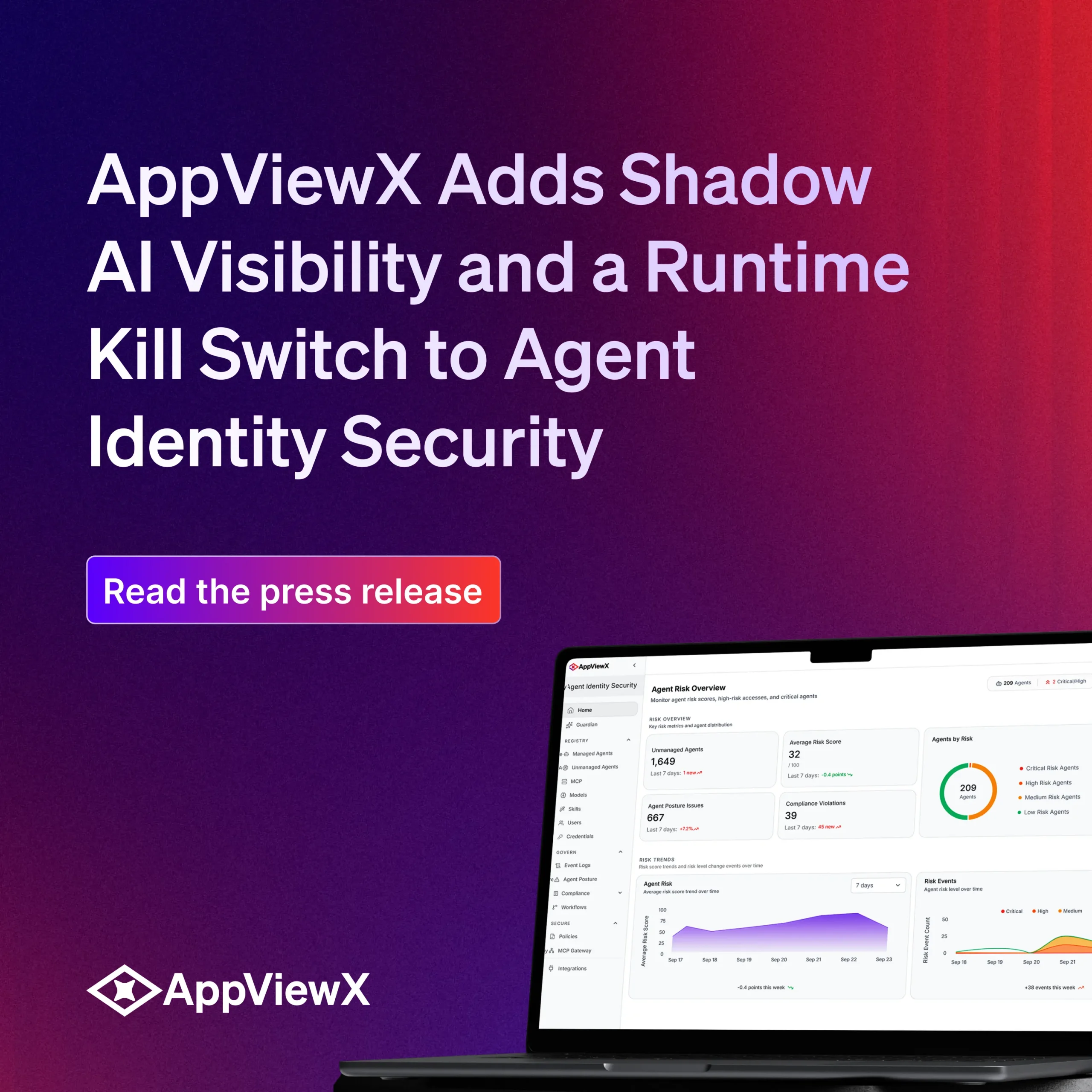
- AppViewX introduces Agent Identity Security, the latest addition to its machine and agent identity management platform, designed to simplify governing AI agents across the enterprise from a single control plane.
- AI agents are the fastest-growing, least-governed class of identity, and most security frameworks were never built for them.
- Quantum computing threatens the cryptographic standards enterprises rely on today, making PQC readiness a foundational requirement for any enterprise deploying AI agents at scale.
AI agents are no longer a future consideration. Gartner projects 40% of enterprise applications will embed task-specific AI agents by the end of 2026, up from less than 5% in 2025. They’re writing code, processing customer data, and making decisions autonomously across multiple systems. And while the productivity gains are real, so is the security exposure they introduce.
AI agents have outgrown enterprise security
McKinsey research shows 80% of organizations have already encountered risky agent behaviors, including unauthorized data exposure and improper system access.
Every AI agent that accesses your systems does so through credentials, tokens, and permissions. Unlike human users, agents operate continuously, act autonomously, and have access to sensitive systems with no one accountable for what they do with them. When an agent is compromised, misconfigured, or over-permissioned, the impact can spread across systems before any team has visibility to respond.
AppViewX’s CEO frames the scale of the shift:
“AI agents have become the largest workforce most enterprises never hired, operating autonomously across sensitive infrastructure with broad access and minimal oversight,” said Archit Lohokare, CEO of AppViewX. “This new class of identity will lead to incredible innovation if governed appropriately for the post-quantum era. Agent Identity Security gives enterprises the visibility, governance, and threat detection to deploy AI agents at scale, without trading speed for security.”
Introducing Agent Identity Security
| New AVX Platform Capability | What it does |
| Agent inventory and risk insights | Unified discovery, centralized AIBOM, no shadow AI blind spots |
| Policy-based agent identity governance | NIST AI RMF, EU AI Act, SOC 2, SEC Cyber Disclosure, audit-ready evidence |
| Adaptive agent access | Task-based least-privilege, PAM, and IAM integration |
| Threat detection | Real-time response, context-aware remediation via Guardian Agent |
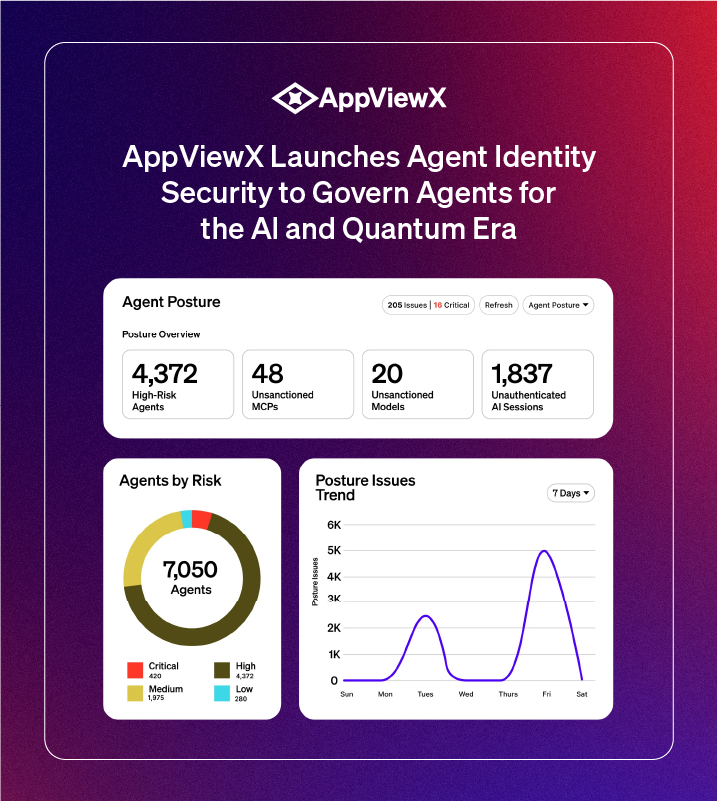
1. Agent inventory and risk insights
Agent inventory and risk insights continuously discover every agent in your environment, including its LLMs, MCP tools, credentials, and configured identities across every agentic platform.
Your security team gets a single, actionable view with no gaps, and a centralized AI Bill of Materials (AIBOM) they can act on immediately. As your agent estate grows, discovery scales with it, ensuring no identity ever operates outside your visibility.
2. Policy-based agent identity governance
Policy-based agent identity governance enforces compliance across your entire AI agent estate. It detects configuration drift and generates audit-ready evidence automatically.
Policies map directly to frameworks, including NIST AI RMF, EU AI Act, SOC 2, and SEC Cyber Disclosure, so compliance is not a separate workstream but an outcome of how governance is enforced.
3. Adaptive agent access
Adaptive agent access applies fine-grained, task-based policies so agents only reach what their specific function requires. This policy is enforced at the identity level and integrated with your existing privileged access management (PAM) and identity and access management (IAM) tooling.
When an agent’s scope changes, access updates automatically, ensuring each entity can only access what it actually needs.
4. Threat detection
Threat detection identifies anomalous agent behaviors in real time, flagging deviations before they escalate into incidents.
Guardian Agent delivers context-aware intelligence and guided remediation tailored to the user’s role, from initial detection through complete resolution, so your team spends less time investigating and more time acting.
Why quantum readiness matters now
Quantum computing is advancing in parallel with AI agent proliferation, and the cryptographic standards most enterprises rely on today are not built to withstand it. When those foundations shift, every credential and certificate your agents use to authenticate becomes a liability.
Industry analysts are watching the same convergence of AI and quantum risk.
“Enterprises are deploying AI agents faster than they can govern them, and that identity security gap creates considerable business risk,” said Todd Thiemann, Principal Analyst, Omdia. “AppViewX is taking the right architectural approach with Agent Identity Security. Grounding agent governance in a native PKI foundation gives enterprises the cryptographic depth needed to tackle both the AI and the quantum computing challenge in one motion, rather than bolting on solutions after the fact.”
Why AppViewX meets your enterprise identity security needs
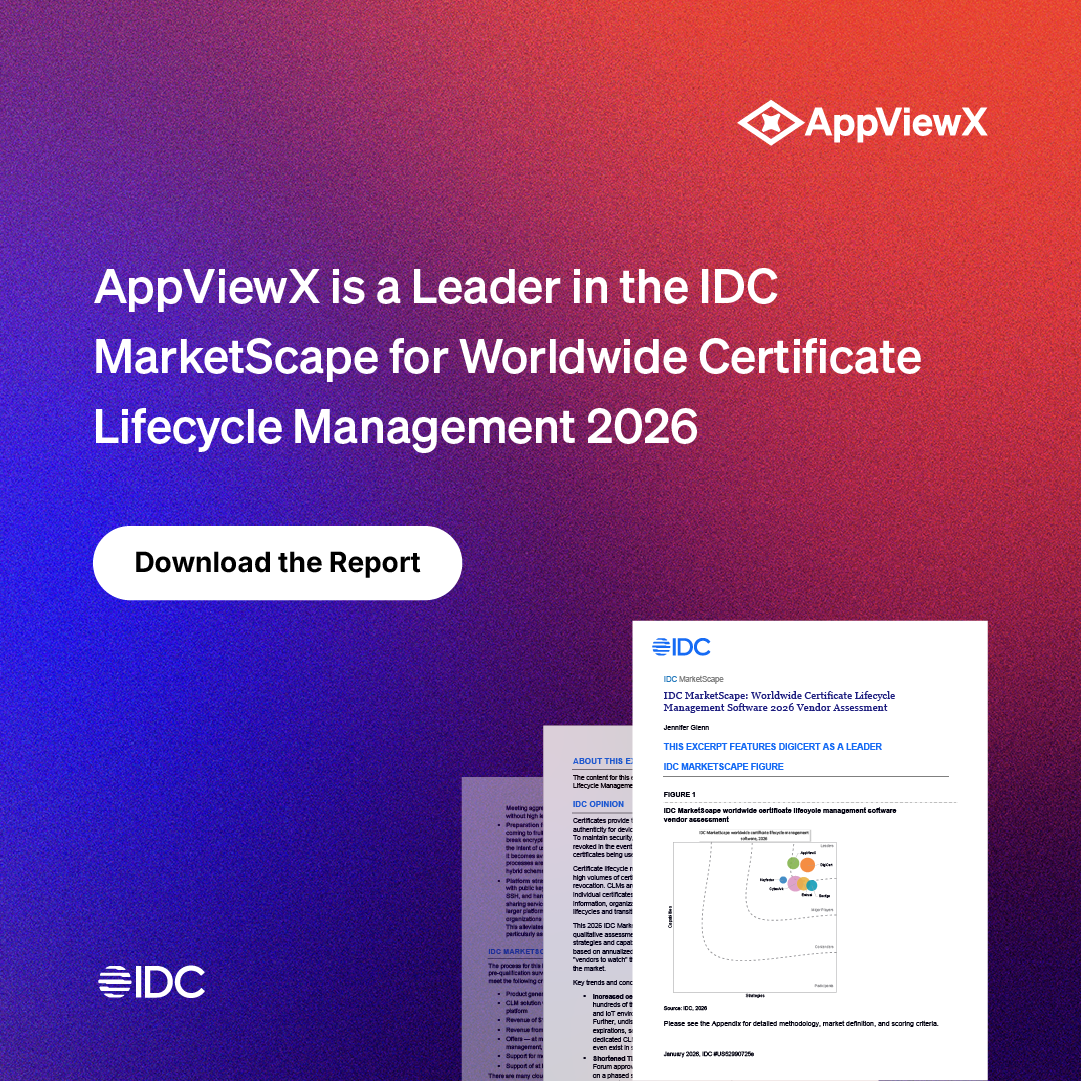
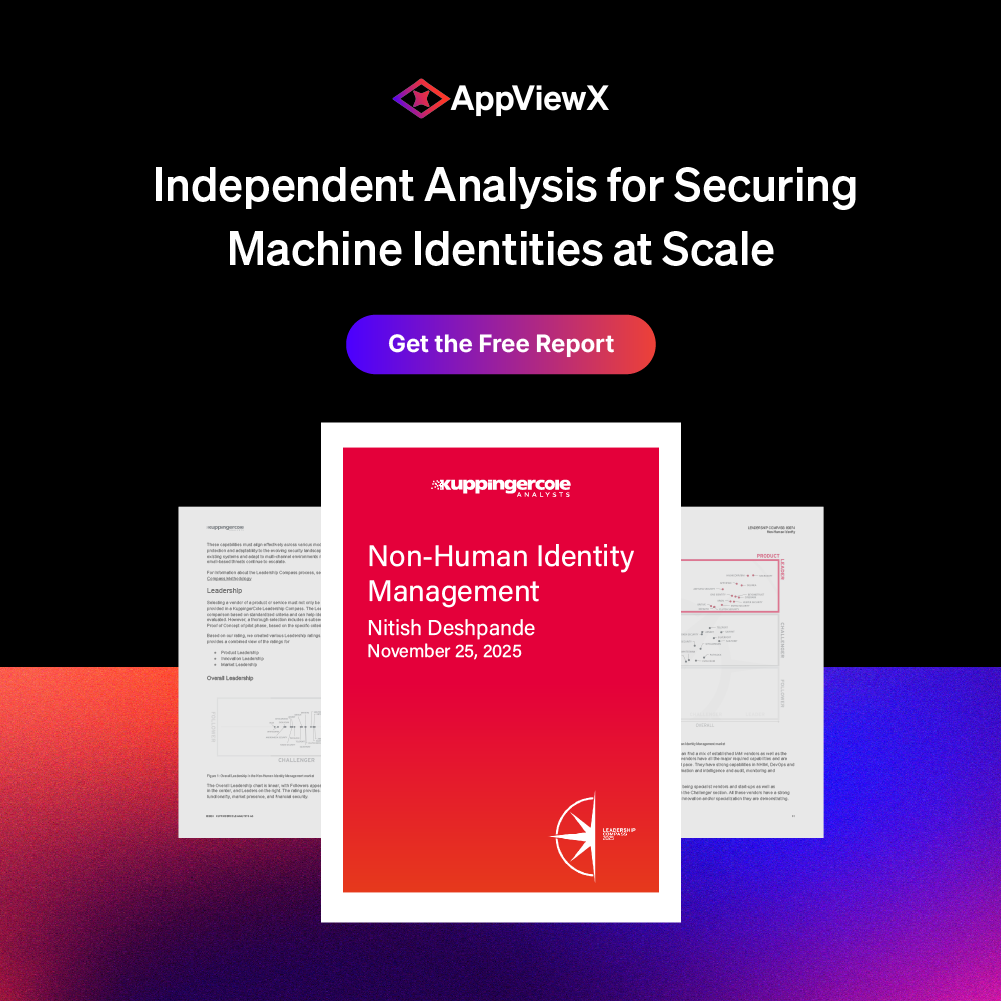
AppViewX is recognized as a leader in the IDC 2026 MarketScape for Certificate Lifecycle Management and KuppingerCole’s 2025 Non-Human Identity Management Leadership Compass.
Agent Identity Security extends that platform into the next category of identity risk without requiring enterprises to adopt a separate tool. One control plane, from SSH keys and code signing to AI agent governance.
Across the enterprise cyber stack, AppViewX customers now receive Agent Identity Security that delivers:
- Continuous agent discovery across all agentic platforms
- Agent-native policy enforcement with AIBOM
- Fine-grained, task-based, least-privilege access control
- Built-in, PKI-native quantum readiness
- Auto-generated, audit-ready compliance evidence
The product is available today as a private preview for qualified enterprises.
Tags
About the Author