


Key Takeaways
- Enterprise buyers should look for a CLM platform that offers comprehensive discovery scanning, closed-loop automation, policy governance, scalability, enhanced vendor-to-client collaboration, and PQC readiness.
- The IDC’s 2026 IDC MarketScape for CLM standalone evaluation confirms that CLM has matured into a strategic security infrastructure.
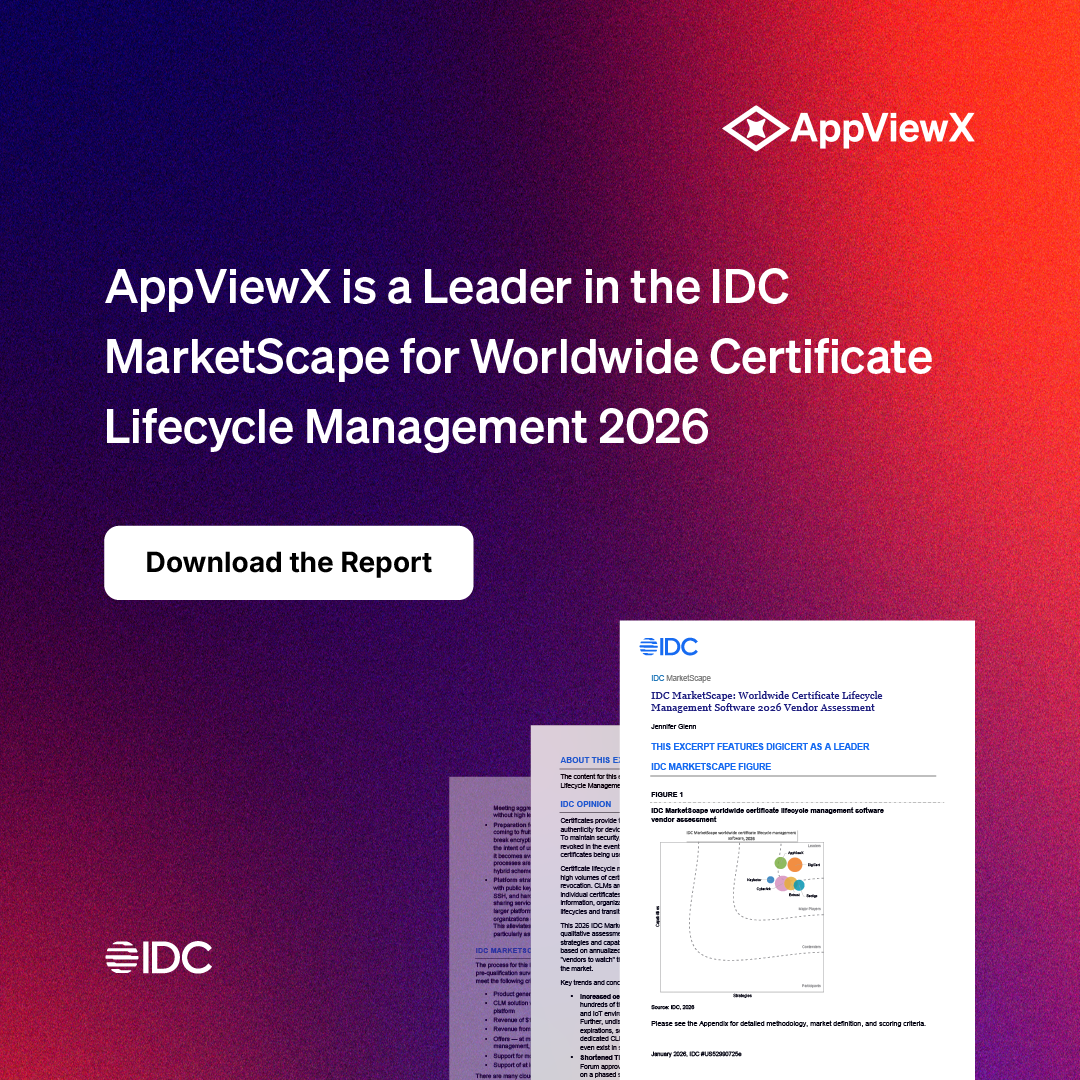
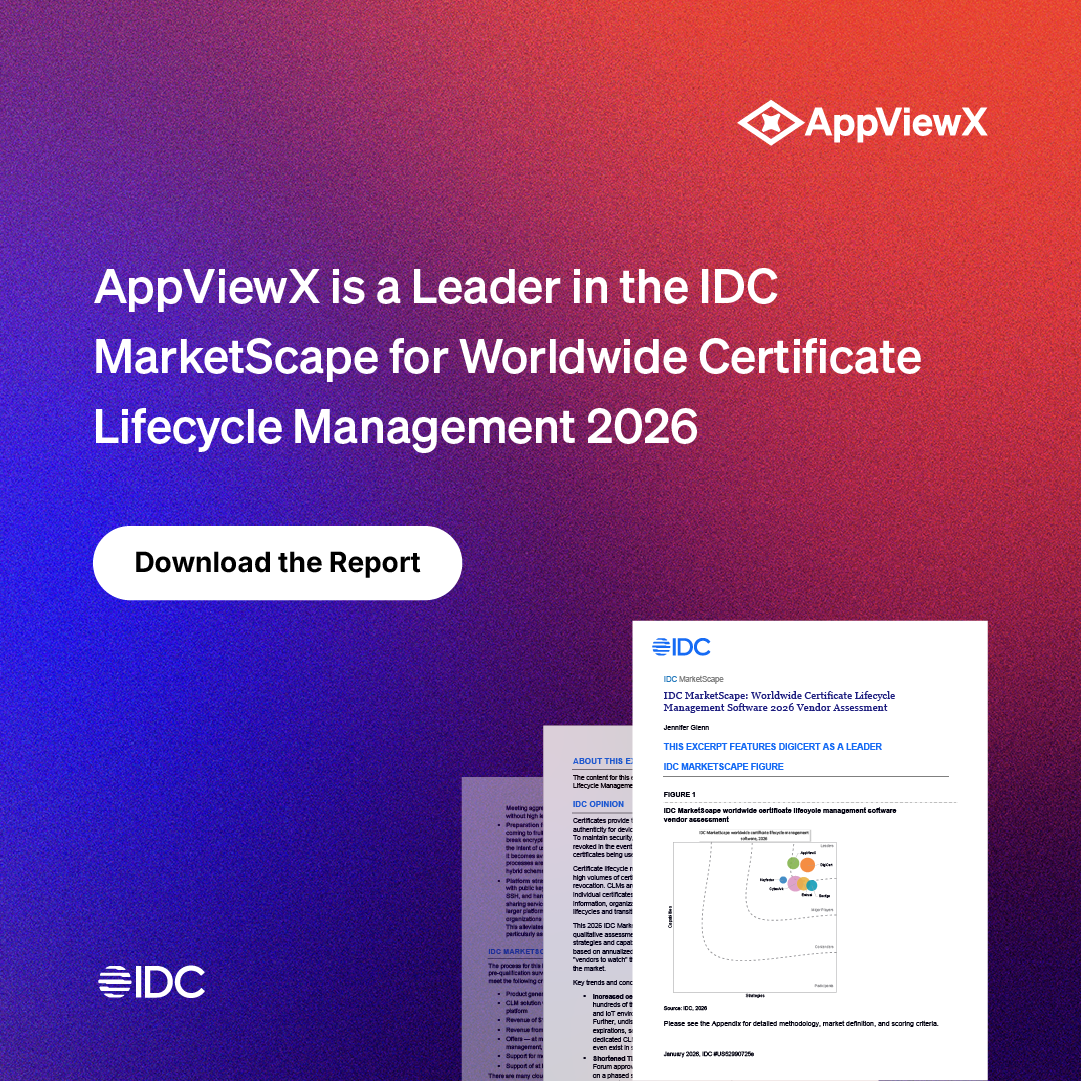
- AppViewX was positioned as a Leader by the IDC for its all-encompassing certificate automation, CA-agnostic architecture, and customer-validated support capabilities.
- Leverage the IDC MarketScape alongside other analyst evaluations, conduct an extensive discovery scan, and validate vendor claims through live demos to help you choose the best CLM solution for your organization.
- CLM is not just for large enterprises — even smaller organizations with limited dedicated cryptography staff can benefit from automation and self-service capabilities, according to the IDC
Why the IDC MarketScape for CLM Matters Right Now
In 2024, NIST published IR 8547, its Post-Quantum Cryptography Transition (PQC) guidance. The document talks about how RSA and ECDSA at 112-bit security will be deprecated by 2030, before being entirely disallowed after 2035. It also outlines a structured approach that organizations can take when adapting to PQC solutions.
On the other hand, the CA/B Forum announced the approval of Ballot SC-081v3 in April of 2025, which set in motion the phased reduction of public TLS certificate validity from 398 days to 47 days. A mandate that will take effect completely by March 2029.
While these two events appear to be running on entirely different paths, they nonetheless converge on the same destination: certificate lifecycle management (CLM).
The International Data Corporation’s (IDC) first dedicated MarketScape for CLM software provides a systematic and independent assessment of CLM vendors that looks into the key factors for handling shortened TLS lifecycles and cryptographic transitions, which are automated discovery, certificate lifecycle automation, policy governance, CA-agnostic integration, scalability, and post-quantum readiness.
It is worth mentioning that the IDC weighted future strategy at 60% and current capabilities at 40%, which is a reflection of an undeniable market reality: nowadays, most evaluated vendors offer similar core features. Hence, it is vital for you to opt for a CLM service that can empower your organization to effortlessly navigate the ever-changing cryptography landscape.
What the IDC Evaluated and Why It Matters for Your Buying Process
When it came to assessing CLM vendors, the IDC leveraged inclusion criteria that gave special attention to enterprise-grade platforms in lieu of just bundled add-ons. They set the bar high for inclusion by looking into vendors that had:
- Generally available products with at least $10 million in revenue
- Coverage in at least two regions
- Support for multiple certificate types and a minimum of two CAs
- Verifiable, automated, and centralized certificate management capabilities
The filtering process excluded cloud-native CLM tools from major cloud providers due to their inability to meet the standalone revenue requirement and their lack of multi-CA support.
How the IDC structured its scoring
The IDC organized its scoring criteria based on two categories, capabilities and strategies. The breakdown of these is as follows:
| Category | Criteria | Weight |
|
Capabilities (40% overall)
|
Product functionality | 35% of category |
| Customer satisfaction | 25% of category | |
| Customer success programs | 15% of category | |
| Offer retention | 20% of category | |
| Pricing flexibility | 5% of category | |
|
Strategies (60% overall)
|
Future offerings and innovation | 45% of category |
| Growth strategy | 20% of category | |
| Innovation perception | 20% of category | |
| Financial and organizational viability | 15% of category |
The heavier strategy weighting tells us one thing: A CLM vendor’s roadmap and long-term trajectory are influential in the decision-making process of software buyers. Security leaders and teams that are planning to conduct their own evaluations can benefit greatly from the IDC scoring framework.
Evaluating Vendor Claims: What to Ask and What to Watch For
Most CLM vendors will say that they offer end-to-end automation. So it’s absolutely vital that you ask what that automation actually covers. Some may offer lifecycle management, but only for certificates issued by them, which is virtually useless in multi-CA environments. Others might provide managed service delivery, which can be great for smaller teams but unsuited for enterprises that need to meet certain compliance requirements.
Evaluating vendor claims goes beyond just checking a box on your feature checklists. It involves:
- Asking vendors to provide a demo of their discovery capabilities across non-native environments, not just within their own CA infrastructure
- Requiring proof of closed-loop automation that consists of provisioning and binding instead of just renewal initiation
- Requesting access to reference customers at a comparable scale, preferably organizations handling similar certificate volumes and system complexity
- Run a proof of concept in your own environment to uncover any areas that are typically overlooked in product demos and sales pitches
The IDC report also underscores a growing trend: vendors combining CLM with PKI, key and secrets management, code signing, SSH lifecycle management, and hardware security modules (HSMs) into unified platforms. While a multifunctional cryptographic platform offers seamless integration and potential cost savings, the IDC notes that most vendors also support third-party interoperability through APIs. This means your decision between a unified platform and a best-of-breed approach should be guided by your organization’s risk tolerance and architectural preferences.
Why AppViewX was named a CLM Leader
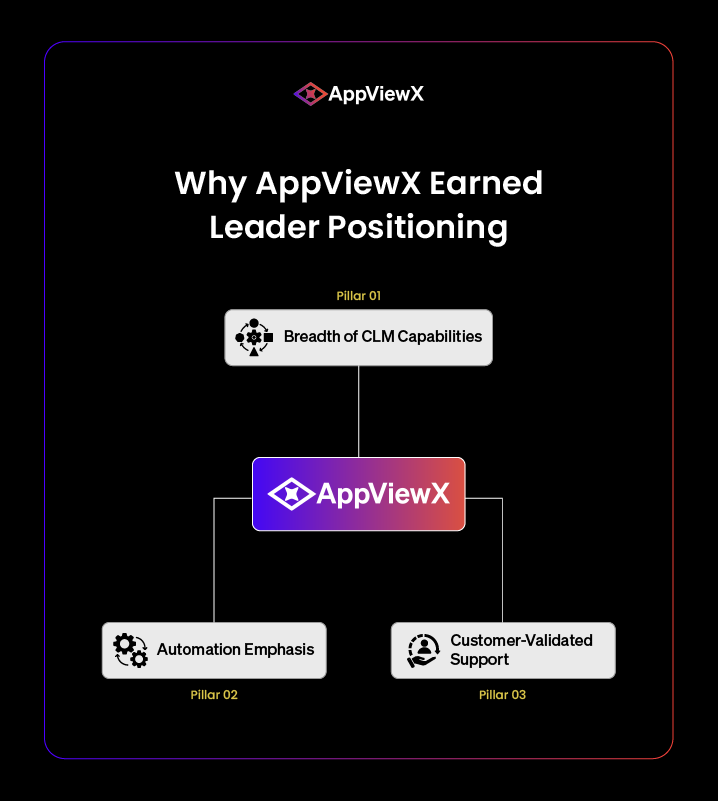
Did you know that AppViewX was positioned as a Leader in the 2026 IDC MarketScape? Due to the breadth of its capabilities and the compelling strength of customer feedback, AppViewX set itself apart from the broad and crowded vendor market, specifically in three areas noted by the IDC’s evaluation:
Breadth of CLM Capabilities
The IDC highlighted that AppViewX’s CLM features are extensive, offering several capabilities for managing and monitoring the overall performance and posture of certificates. The range of features includes automated discovery, inventory management, lifecycle facilitation, and control over TLS/ SSL, client authentication, code signing, email, document signing, IoT certificates, and SSH keys. Such offerings are imperative if you wish to easily handle certificates spread across various assets in real time.
Automation Emphasis
Another thing noted by the IDC is how AppViewX’s policy-driven, closed-loop workflows allow its platform to manage hundreds of thousands of certificates across hybrid and multicloud environments. This eliminates the need for a certificate management system built on partial automation that uses separate tools. From discovery to verification, you can achieve CLM automation on a single platform. This level of automation can give you a leg up as certificate validity periods continue to shorten, because it saves valuable time and resources that could be put towards more pressing business concerns.
Customer-Validated Support
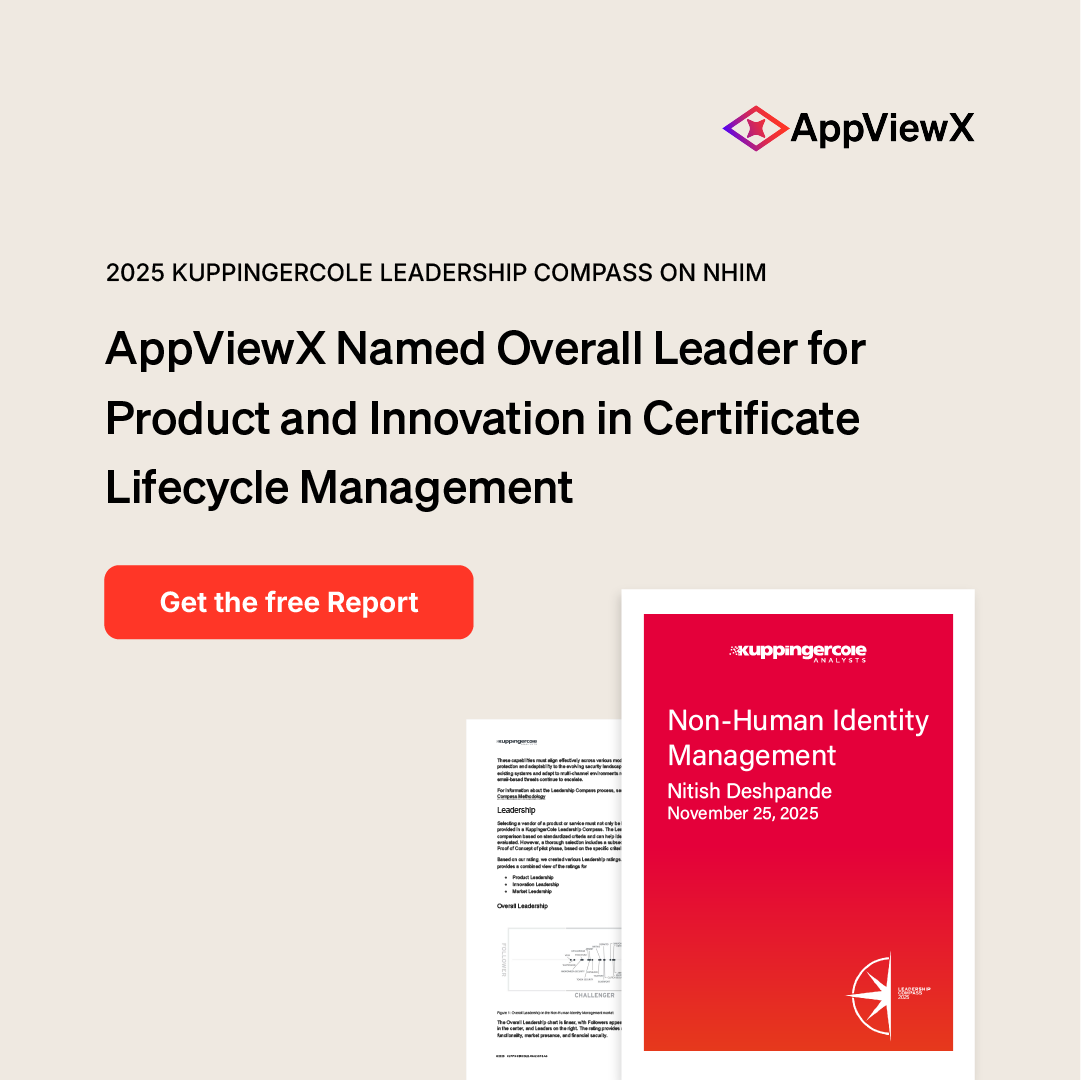
AppViewX’s strong customer support responsiveness was something that the IDC found hard to ignore, given that it enabled the direct collaboration between the service’s engineering and customer success teams and their enterprise clients. Customer concerns are attended to through hands-on engagement, with any feature requests immediately added to product roadmaps. While such a procedure seems like the norm, its importance cannot be overstated, especially because enterprise CLM is not a one-and-done deployment. An organization that aims to thrive in a world where certificate volumes increase, compliance requirements evolve, and PQC timelines loom ever closer needs a dynamic CLM platform that can seamlessly respond and adapt to operational feedback. This recognition is proof of AppViewX’s market leadership, reinforcing its place as an Overall Leader in KuppingerCole’s NHIM Leadership Compass.
Considerations for Your Evaluation
Transparency matters when evaluating any vendor. The IDC highlighted two areas to be aware of with AppViewX. First, the breadth of the AVX Platform — spanning CLM, PKI, PQC posture management, Kubernetes, SSH, and code signing — can add complexity for organizations that are still in the early stages of their CLM journey or those that lack clear cryptographic ownership. Second, while installation can be quick, reference customers indicated that upgrades and workflow design benefit from planning and coordination across cybersecurity, identity, infrastructure, and application teams. These are typical considerations for any enterprise-grade platform, and they reinforce the value of running a POC in your own environment before committing.
CLM is not just for large enterprises
The IDC report emphasizes that CLM is not exclusively for large enterprises. While large organizations often manage the highest volumes of certificates, even the biggest enterprises typically have small teams dedicated to CLM and cryptography. On the other hand, smaller organizations may not have a dedicated team for it at all. The IDC stated that certificate management automation and empowering self-service can help organization redirect their efforts and resources to more pressing concerns. For teams without dedicated cryptography or certificate practitioners, CLM automation alleviates what the IDC describes as a burden often treated as an extra task layered onto someone’s regular day job.

Next Steps for CLM Buyers
With all that we learned from the IDC report, it’s clear that to succeed in the next decade of cryptographic change, you must choose your CLM platform wisely. To aid the decision-making process, the 2026 IDC MarketScape offers a structured evaluation that you can use alongside Gartner’s CLM guidance and KuppingerCole’s NHIM evaluations for a panoramic view of today’s vendor market. Consider taking the following steps to help your organization make a well-informed decision on which CLM platform will allow you to thrive in the PQC era:
- Download the full IDC MarketScape report to learn more about AppViewX’s complete evaluation process and the nuances of today’s vendor landscape.
- Run a free SSL/ TLS certificate discovery scan to gain better insight into your entire certificate infrastructure.
- Request a demo and discover how AppViewX can help you build crypto-agility, acquire certificate visibility, and implement CLM automation.
Knowing the difference between marketing materials and operational reality will ensure the effectiveness of your CLM strategy.
Tags
About the Author

Krupa Patil
Product Marketing Manager
A content creator focused on providing readers and prospective buyers with accurate, useful, and latest product information to help them make better informed decisions.