










Key Takeaways
- Expired SSL/TLS certificates trigger three compounding business risks: reputation damage from security warnings, vulnerability to man-in-the-middle attacks, and operational paralysis, costing enterprises $300,000+ per hour of downtime and up to $11.1 million per incident.
- High-profile outages at the Bank of England, Alaska Airlines, and Cisco SD-WAN prove no organization is immune.
- Browser security warnings don’t distinguish between expired certificates and active attacks. Customers see both as equally dangerous, and brand equity takes damage.
- Every department feels the impact: support ticket surges, SEO ranking drops, developer burnout, and C-suite liabilities.
- Shrinking certificate lifespans make manual spreadsheet tracking a recipe for disaster. Automation is the only scalable path forward.
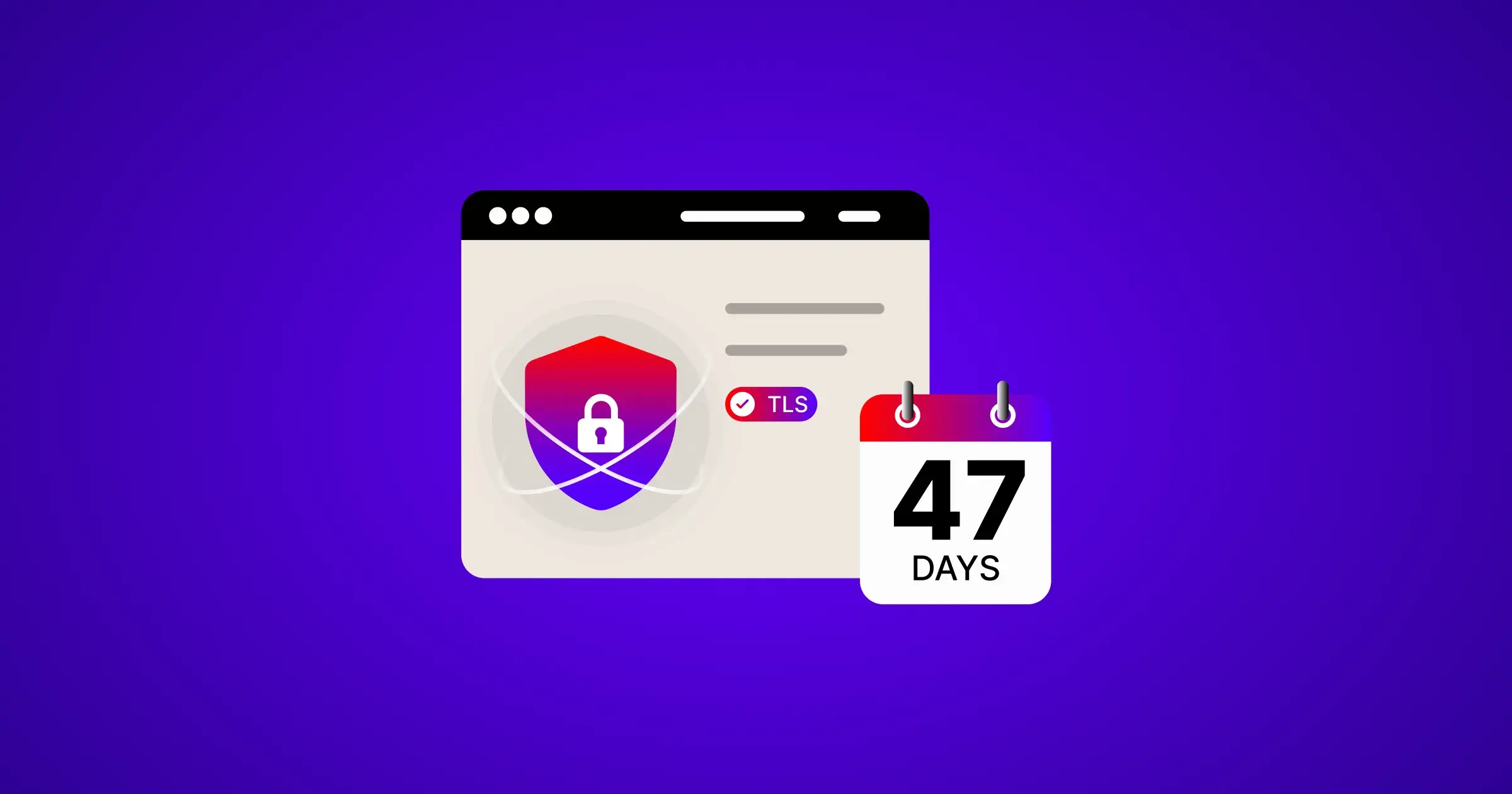
SSL certificates are the bedrock of trust on the internet. They serve two primary purposes: encryption and authentication. By verifying the identity of the server and enabling secure key exchange, these certificates allow users and applications to establish encrypted connections. When certificates expire, browsers and clients can no longer validate the server’s identity, preventing secure connections from being established. This poses a range of problems and risks for the business.
On July 21, 2024, an expired SSL certificate caused the Bank of England’s high-value payment system to stop processing transactions. Homebuyers couldn’t complete purchases. Banks couldn’t settle accounts. Two months later, Alaska Airlines grounded flights in Seattle after a certificate failure took down multiple systems. The airline confirmed: “This was not a cyber attack. It was a certificate issue that impacted multiple systems.”
This article explores the specific risks encountered by different business stakeholders and why Automated Certificate Lifecycle Management is the only viable path forward in 2026.
Risk 1: Reputation takes a hit
The “Your connection is not private” warning doesn’t distinguish between an expired SSL certificate and an active attack. To your customers, both look equally dangerous.
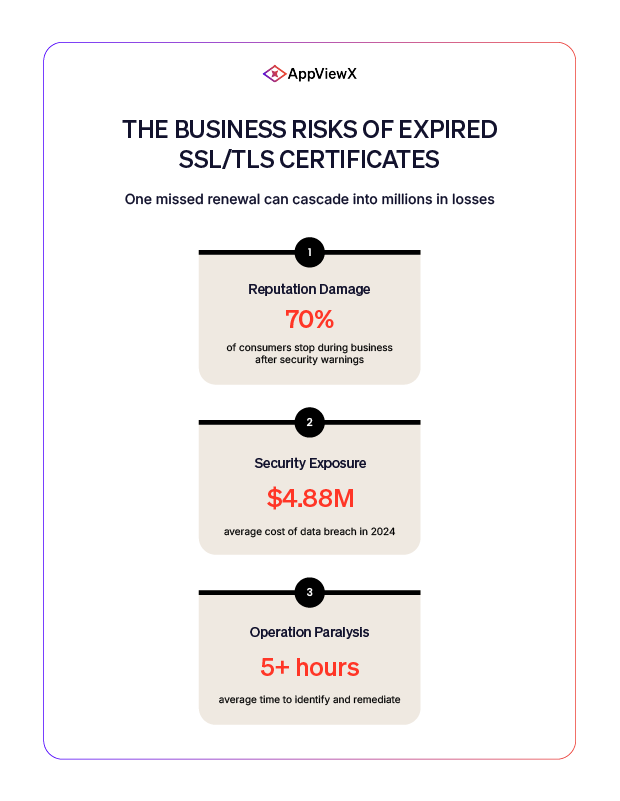
The perception damage runs deeper than lost traffic. According to the Consumer Trust & Risk Report, 70% of consumers would stop shopping with a brand following a security incident. An expired SSL certificate triggers exactly that perception. Visitors see a security warning and assume the worst. Once trust is broken, it takes time to rebuild.
Risk 2: Security becomes vulnerable
TLS certificates do more than display a padlock. They authenticate the identity of the server and enable encrypted communication between users and your applications.
When a certificate expires, browsers and clients can no longer validate the server’s identity. As a result, secure connections fail, and users encounter blocking security warnings.
- Encryption breaks down. Data transmitted during the outage window travels unprotected, exposing credentials, payment information, and session tokens to interception.
- Attack surface expands. Expired SSL certificates increase exposure to man-in-the-middle attacks, SSL stripping, and data interception, because the client can no longer reliably validate the server’s identity, and users may click through warnings or systems may fall back to insecure protocols.
- Emergency fixes introduce risk. When teams scramble to restore service, security shortcuts happen. Temporary configurations get deployed under pressure. These workarounds often create lasting vulnerabilities that persist long after the immediate outage is resolved.
Risk 3: Operations paralyze
Certificate failures extend far beyond your website. Modern enterprise infrastructure relies on certificates for machine-to-machine communication, and when those connections fail, everything downstream stops.
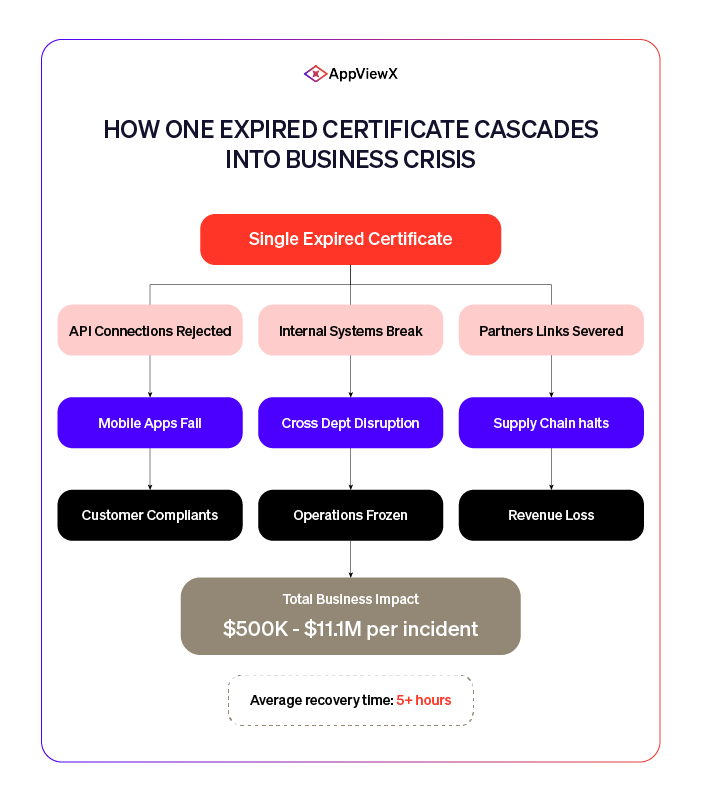
- APIs reject connections. An expired SSL certificate on a single API endpoint can simultaneously break mobile apps, partner integrations, and automated workflows. When Cisco’s SD-WAN certificates expired in 2024, approximately 20,000 devices were affected, disrupting cloud services, data storage, and e-commerce tools across their customer base.
- Internal systems fail. HR portals, databases, monitoring tools, and payment gateways all depend on internal certificates. A single SSL certificate expiration can trigger cascading failures across departments. When the Bank of England’s CHAPS payment system experienced a certificate-related outage in July 2024, it halted transactions worth £360 billion daily, leaving homebuyers unable to complete purchases.
- Recovery takes hours. The 2024 PKI and Digital Trust Report found it takes 2.6 hours to identify the root cause and another 2.7 hours to remediate outages. 5+ hours of downtime from a single missed renewal. For organizations without complete certificate visibility, that identification phase often stretches even longer.
The operational burden is growing. With the first reduction in public TLS certificate lifetimes to 200 days already in effect, organizations will now have to renew certificates every 200 days.
Different POVs during an SSL expiration
1. The Customer Success perspective
When a service goes down due to an SSL certificate expiration, the Customer Success department becomes the frontline for frustration. If a SaaS platform or mobile app relies on an expired SSL certificate, the application may fail to establish secure connections and become inaccessible to users. This results in an immediate influx of support tickets.
It is difficult for support agents to reassure clients about data safety when the client’s own browser is warning them of a potential threat. To maintain high Customer Satisfaction (CSAT) scores, technical reliability must be a given. An outage often leads to increased churn, especially during contract renewal periods.
2. The Marketing and Sales perspective
For marketing teams, an SSL outage is an immediate “Digital Wall of Shame.” The moment a certificate expires, browsers like Google Chrome and Apple Safari display a full-page warning.
Search engines prioritize secure sites. An outage can lead to a sudden drop in rankings. According to standards discussed by the CA/Browser Forum, security is a primary ranking signal. Once a site is flagged as “insecure,” recovering that organic authority can take weeks of consistent uptime.
3. The DevOps and Engineering perspective
From an engineering standpoint, an expired SSL certificate is often seen as a preventable failure. However, in complex microservices environments, manual tracking is nearly impossible. When a “Priority 0” outage occurs, all innovation stops. Developers must drop their current sprints to identify which specific certificate in a chain of hundreds has failed. This “firefighting” culture leads to burnout and delays product roadmaps.
4. The Executive and Finance perspective
At the C-Suite level, the risks are measured in dollars, cents, and legal liability. With downtime costing enterprises $14,056 per minute on average (and up to $23,750 for large enterprises), a 5-hour outage translates to $4.2–$7.1 million in direct losses.
Beyond lost revenue, organizations face emergency response costs, support staffing surges, customer refunds, and the operational burden of war-room mobilization.
For organizations handling regulated data, an SSL outage may raise compliance concerns under frameworks such as PCI-DSS, HIPAA, and GDPR. Regulatory fines compound the direct costs, and audit findings create ongoing remediation burdens.
The compound effect of SSL expiration
These risks don’t exist in isolation. The effects compound. A certificate expiration triggers a security warning (reputation damage), creates vulnerability windows (security exposure), and takes hours to resolve (operational paralysis). Each hour of downtime costs enterprises an average of $300,000+, according to industry research.
Organizations building crypto-agility now with complete visibility and closed-loop automation are transforming these compliance requirements into operational advantage. Those relying on spreadsheets and calendar reminders will face these four risks more frequently as certificate lifespans shrink.
Immediate steps during an SSL certificate outage
When an SSL certificate expires unexpectedly, every minute counts. Here’s how to minimize damage and restore service quickly.
- First 15 minutes: Contain and communicate
Alert your incident response team immediately. Post a status update on your public status page before customers flood support channels. Acknowledge the issue. Silence breeds speculation. - Next 30 minutes: Identify the scope
Determine which certificate has expired and which systems it affects. Check your certificate inventory for the affected domain, API endpoint, or internal service. If you lack centralized visibility, start with customer-facing systems first. - Hour one: Execute the fix
Renew or reissue the certificate through your Certificate Authority. For immediate relief, some organizations temporarily deploy an alternate certificate while securing a properly validated replacement. Ensure your team follows proper validation procedures even under pressure—shortcuts create lasting vulnerabilities. - Post-recovery: Prevent recurrence
Document the root cause. Was it a missed renewal reminder? An unknown certificate? A handoff failure between teams? Use this incident to audit your complete certificate inventory and implement automated monitoring with alerts at 90, 60, and 30 days before expiration.
The goal isn’t just recovery. It’s ensuring this never happens again.
Preempt all SSL certificate expiration risk.
Manual management via spreadsheets is a recipe for disaster. As validity periods shrink, the window for error narrows. The risks of SSL outages are too high to ignore. Whether it is the loss of customer trust, the disruption of internal services, or the threat of regulatory fines, the impact is felt across the entire business.
Automation provides holistic visibility by centralizing certificate management across multi-cloud and on-premise environments into a single pane of glass. By leveraging standardized protocols such as ACME for end-to-end renewals, businesses can enforce rigorous security policies without the risk of manual errors or service interruptions. This proactive approach ensures that every digital identity remains compliant with evolving industry standards while maintaining continuous, uninterrupted trust.
By implementing a robust Certificate Lifecycle Management solution, businesses can ensure that they remain secure, compliant, and always online. CLM provides a centralized platform to discover, monitor, and automate the entire certificate lifecycle.
Assess Your Certificate Risk
Run a free certificate scan to identify expiring certificates across your public-facing infrastructure.
Tags
About the Author

Krupa Patil
Product Marketing Manager
A content creator focused on providing readers and prospective buyers with accurate, useful, and latest product information to help them make better informed decisions.