Best SSL Certificate Management Tools Compared

Key takeaways

  • SSL certificate management requires three things: finding every certificate your business uses, renewing and installing each one automatically before it expires, and keeping the freedom to switch certificate providers or encryption methods when industry rules change.
  • Once validity drops to 47 days in 2029, public TLS certificates will need renewing every six to seven weeks, so renewal volume grows quickly for organizations with large certificate estates.
  • Discovery, automated renewal, CA-agility, and 47-day and post-quantum readiness are key decision factors, as validity periods shrink and RSA and ECC are phased out.
  • AppViewX leads on all four: mapping certificates across every environment, automating their journey from request to installation, working with any CA, and preparing the estate for new algorithms.
  • DigiCert, Keyfactor, and AWS Certificate Manager fit specific needs: a single CA vendor, open-source PKI, and AWS-only workloads.

Public TLS certificates issued on or after March 15, 2026, can be valid for no more than 200 days, down from the previous limit of 398. Under the CA/Browser Forum’s approved schedule, that maximum drops to 100 days in March 2027 and 47 days in March 2029.

Every reduction multiplies renewal volume across the entire certificate estate. The SSL certificate management tools built for that volume are the ones that take people out of the renewal loop entirely.

What to look for in an SSL certificate management tool

Essential factors apply to any enterprise managing certificates at scale, while situational factors depend on the vendors and tooling already in place.

Criterion Why it matters Priority
Certificate discovery Teams can only renew and govern certificates they know exist Essential
Trusted CA and vendor support Simplifies buying and support for teams working with one CA Situational
Multi-CA support and CA-agility Lets teams move to a new CA quickly when trust or pricing changes Essential
Automated renewal and deployment Absorbs rising renewal volume without adding headcount Essential
Open-source PKI Gives PKI teams direct control over their CA software Situational
AWS-native integration Keeps certificate management inside the AWS console for AWS-only teams Situational
47-day and PQC readiness Keeps certificates compliant as validity periods drop and algorithms change Essential

Certificate discovery across hybrid and multi-cloud

Automation, policy, and audit reporting only reach the certificates in the inventory. With 73% of organizations now running a hybrid cloud strategy, certificates sit across public clouds, on-prem data centers, load balancers, and containers, often issued by different teams through different CAs.

Strong discovery covers both public and private trust certificates, runs continuously, and captures context such as location, owner, chain of trust, and crypto strength alongside each expiry date.

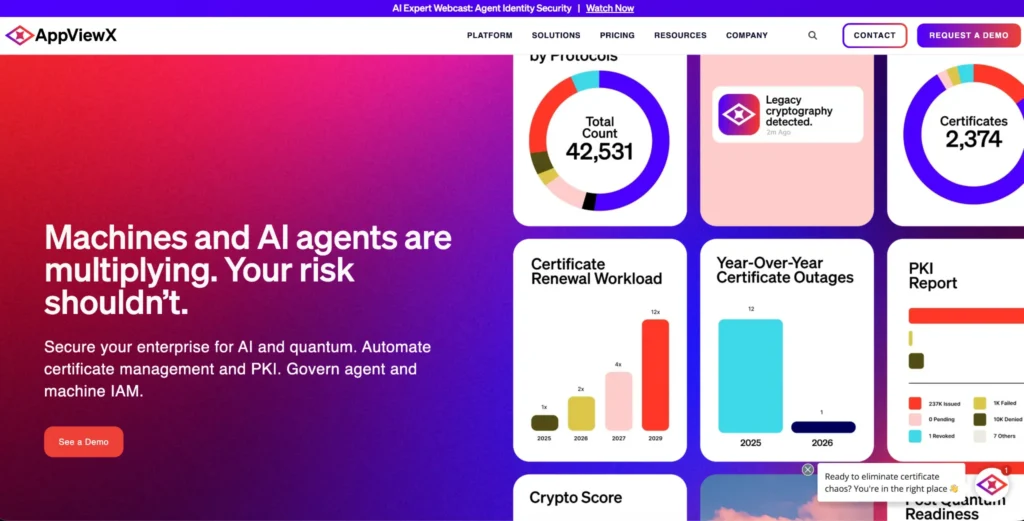
AppViewX discovery engine

AppViewX Smart Discovery scans across your environments to surface unmanaged, rogue, and non-compliant certificates, then brings them into one live inventory. Ownership and policy enforcement apply from the moment a certificate is found, so every certificate it surfaces has an accountable owner.

Trusted CA and vendor support

Buying certificates and the software that manages them from the same issuer is the shortest path for many organizations. One vendor handles issuance, validation, and support, which speeds up procurement and keeps every support conversation in one place.

DigiCert ONE CA platform

DigiCert pairs a long-established public CA with support that reviewers consistently call out, and one G2 reviewer describes it as a well-trusted source across its range of offerings.

Governance is the area to probe during evaluation. DigiCert ONE scores 6.7/10 for audit and enforcement on G2, below the 8.5 category average.

AppViewX covers similar ground for private certificates. Its crypto-agile, CLM-integrated PKI issues them on the same platform that manages them, while public certificates keep coming from the CAs an organization already trusts.

Multi-CA support and CA-agility

Relying on a single CA ties every certificate to that CA’s standing with browsers. In June 2024, Google announced Chrome would distrust new certificates chaining to Entrust roots after six years of compliance failures, leaving Entrust customers until November 2024 to move new issuance to another provider.

A CA-agile platform supports multiple CAs side by side, applies one policy across all of them, and reissues certificates from a new CA in bulk.

AppViewX CA flexibility

Built for CA-agility with no CA lock-in, AppViewX lets security teams shift issuance between providers without rebuilding workflows. Its crypto-agile PKI runs on the same platform, so internally issued certificates get the same visibility and governance as those from public CAs.

Automated certificate renewal and deployment

At 47-day validity, each public certificate renews about eight times a year, so an estate of 5,000 certificates adds up to roughly 39,000 renewals annually. Containers raise the count further: 82% of container users now run Kubernetes in production, where certificates spin up and retire alongside the workloads they protect.

Full automation spans the entire chain: enrollment, approval, issuance, installation, and confirmation that the new certificate is live.

AppViewX lifecycle automation

Closed-loop automation runs the lifecycle end to end, including binding certificates to load balancers, web servers, and other endpoints, and AppViewX CLM for Kubernetes carries it into container environments. On G2, AppViewX earns 9.2/10 for workflow and the same score for audit and enforcement, ahead of DigiCert ONE and Keyfactor EJBCA on each.

Explore how can accelerate your 47-day readiness. can accelerate your 47-day readiness.

Open-source, standards-based PKI

PKI engineers who want to inspect, extend, and self-host their CA software look for an open-source foundation first.

Keyfactor EJBCA for PKI teams

EJBCA comes from the creators of the EJBCA Community open-source CA and remains a common pick for private PKI built on open standards, with a G2 reviewer highlighting its standards-based design.

Workflow automation deserves a closer look, since EJBCA scores 7.6/10 for workflow on G2.

AppViewX supports the same protocol-driven approach. The platform handles ACME-based issuance and renewal and ships with pre-configured ACME clients, so PKI teams can automate renewals without building custom integrations.

Native certificate management for AWS workloads

Organizations that run entirely on AWS often prefer certificate management built into the console they already use, with no separate platform to deploy or license.

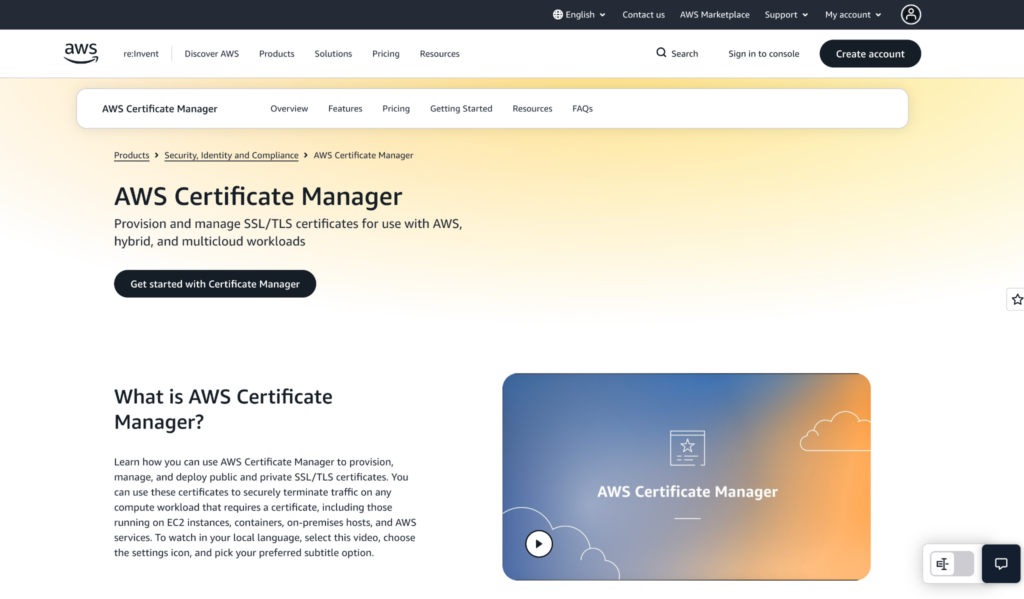
AWS Certificate Manager (ACM)

ACM attaches certificates directly to AWS services and holds a 4.5/5 rating on G2 across 58 reviews. One G2 reviewer singles out its seamless integration with ELB, CloudFront, and API Gateway, adding that public certificates come free.

The same reviewer notes that AWS-managed public certificates can’t easily be exported for use elsewhere, and that certificates are tied to individual regions. That makes ACM a strong fit inside one cloud and a harder one to stretch across hybrid estates.

For organizations that pair AWS with other clouds or on-prem systems, AppViewX integrates directly with AWS services, including EC2, ELB, ACM, IAM, and CloudFront. Teams can keep ACM in place across multiple AWS accounts and manage those certificates alongside every other certificate they hold.

47-day TLS and post-quantum readiness

The same CA/Browser Forum ballot cuts how long a CA can reuse domain validation data, from 398 days to 10 days by March 2029, which brings validation into almost every renewal. On the cryptography side, NIST has finalized its first PQC standards and proposed deprecating RSA and ECC after 2030, with full disallowance after 2035.

Both come down to changing certificates and the algorithms behind them across the full estate on short notice.

AppViewX crypto-agility

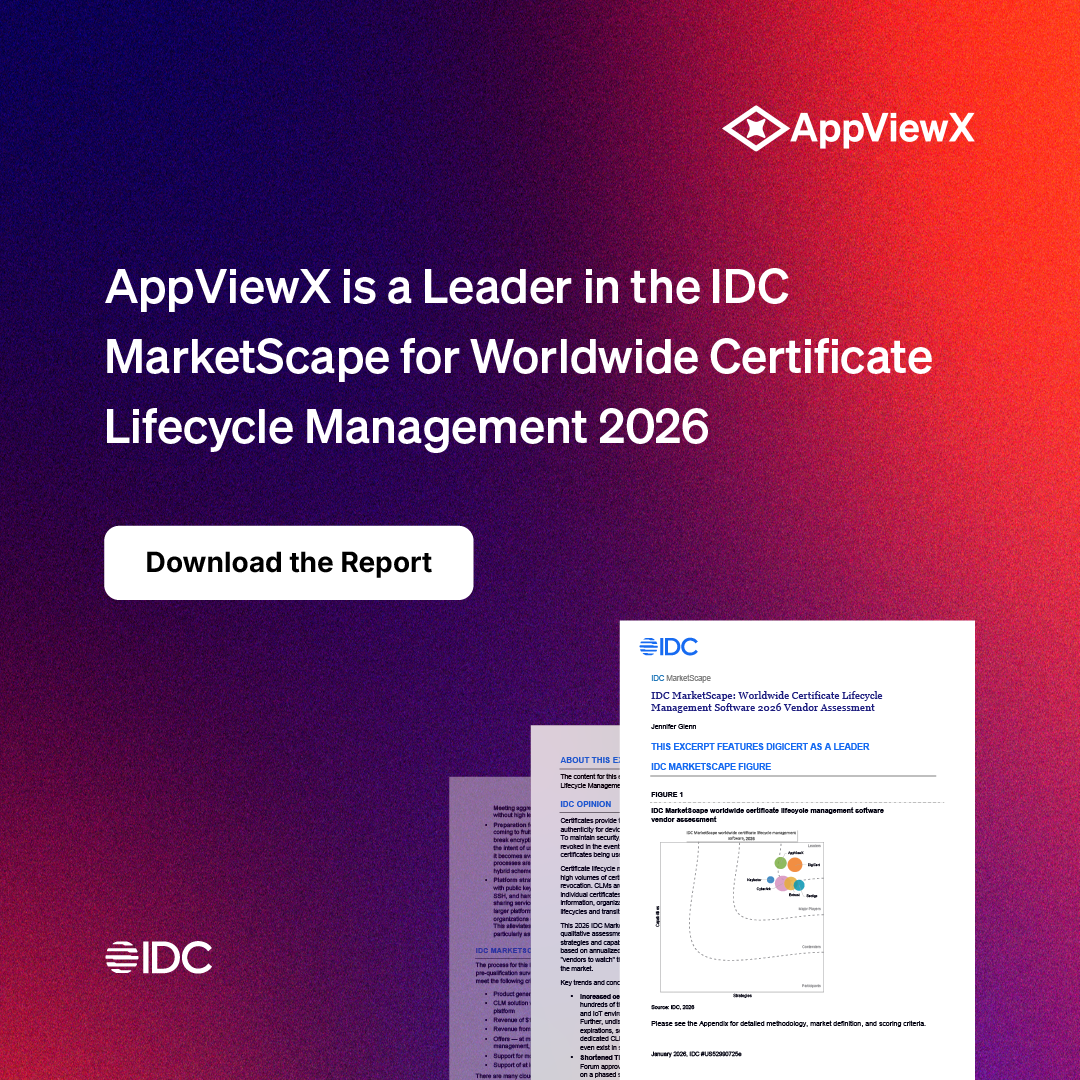
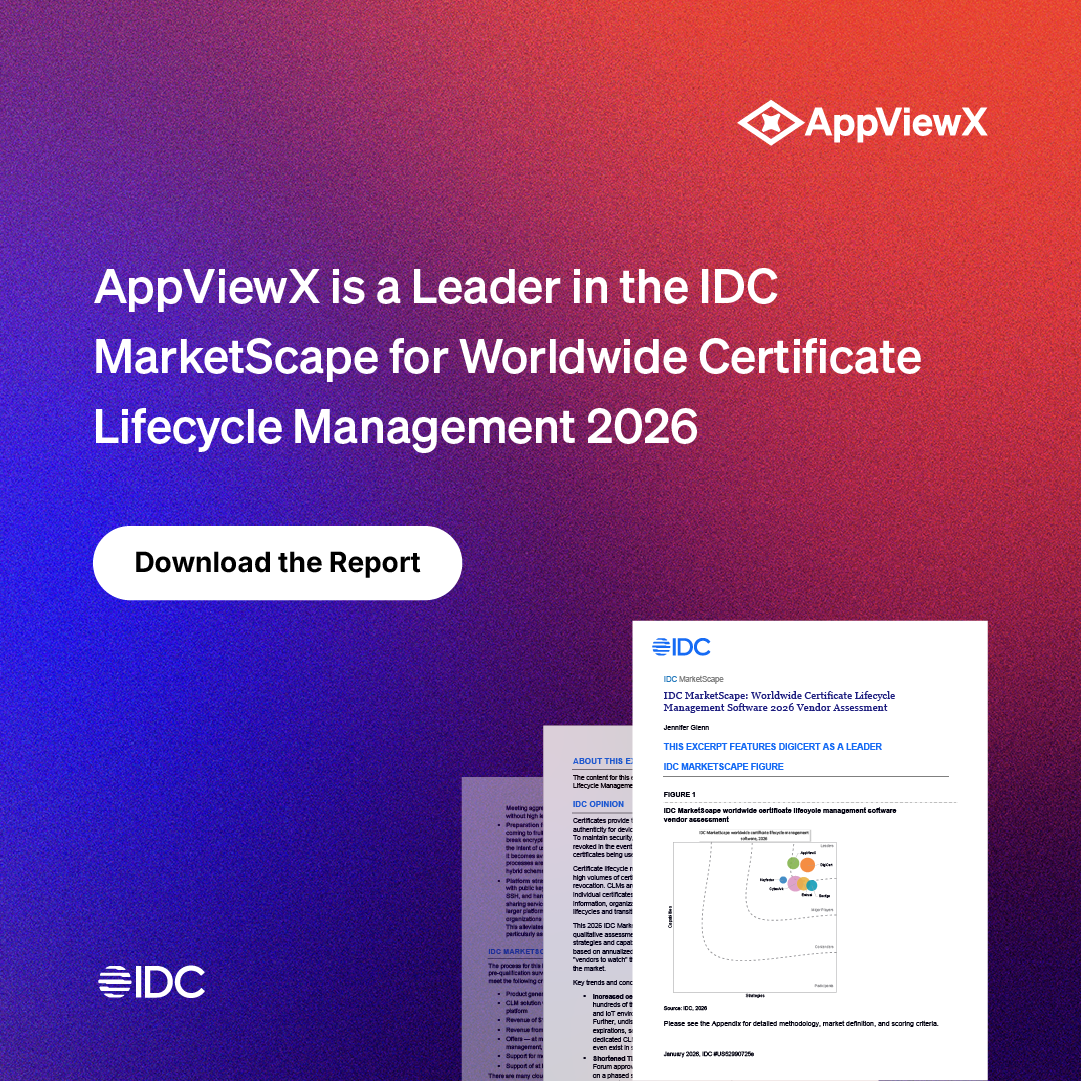
Dedicated 47-day readiness dashboards benchmark the estate against every step of the schedule, alongside insight into cipher strength, hashing algorithms, and key sizes. Post-quantum readiness capabilities then reissue certificates with stronger algorithms across thousands of endpoints. AppViewX is also named a Leader in the 2026 IDC MarketScape for worldwide CLM software.

How to choose the right SSL certificate management tool

Shortlist on the essential criteria first, then use situational strengths as tiebreakers. Asking every vendor the same questions in a demo makes their answers directly comparable.

Factor Question to ask in a demo
Discovery Can it find certificates across every cloud, data center, and Kubernetes cluster we run?
CA support Which public and private CAs does it integrate with out of the box?
CA-agility How long would it take to move 1,000 certificates to a new CA?
Automation Does automation stop at issuance, or does it install and verify the certificate on the endpoint?
47-day readiness Can it show how our renewal volume changes at each step of the CA/Browser Forum schedule?
PQC readiness Can it report which certificates use RSA or ECC and reissue them with new algorithms?
Portability Can certificates it issues be exported and used outside a single cloud provider?

Why AppViewX for SSL certificate management

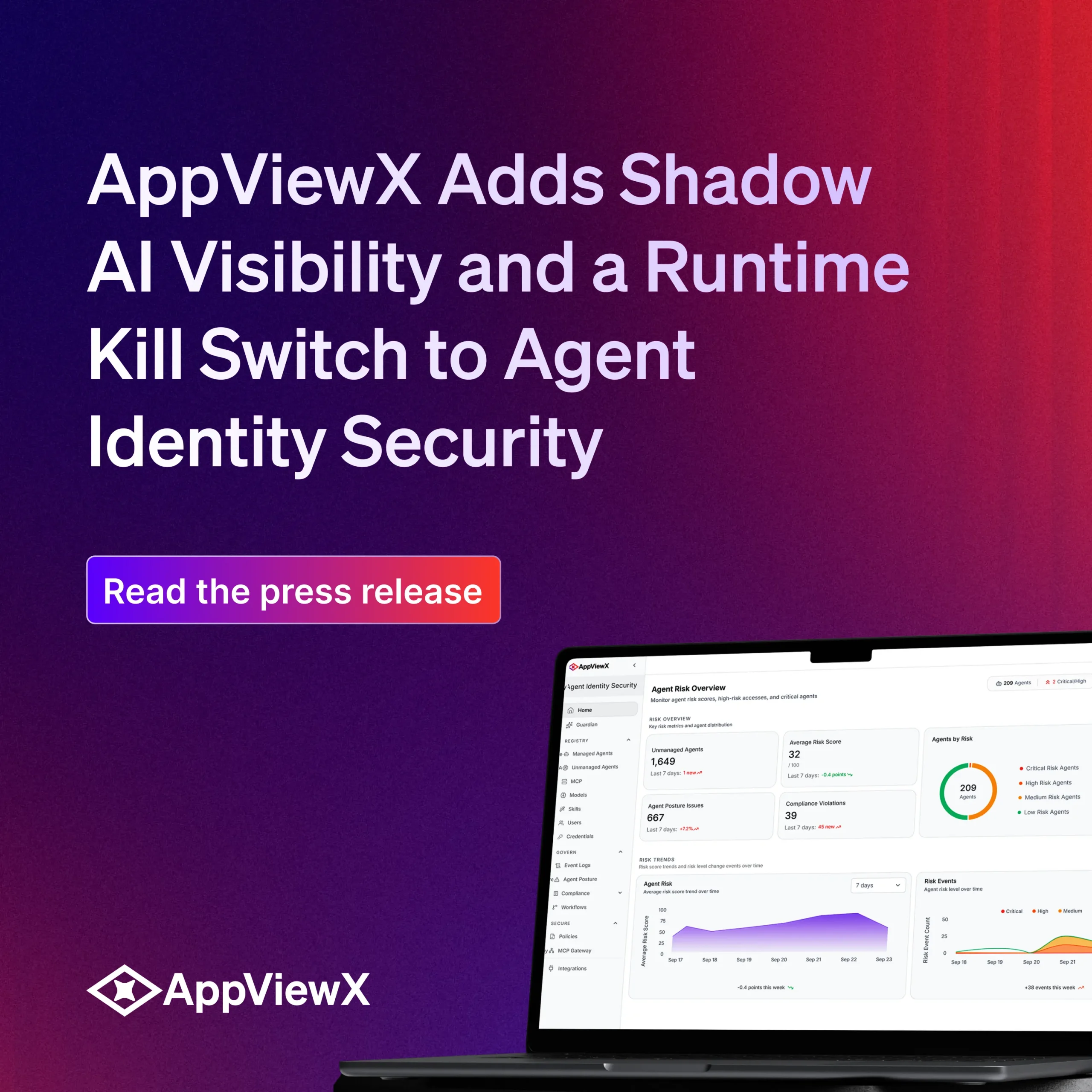
AppViewX treats SSL/TLS as one part of a broader machine identity program. The AppViewX platform that manages public and private TLS certificates also covers SSH keys, code signing, and AI agent identities, so security teams govern every machine credential through a single console.

That breadth rests on more than a decade of building PKI and machine identity infrastructure for some of the world’s largest banks, manufacturers, and insurers.